How Sentence Length Controls What Your Reader Feels
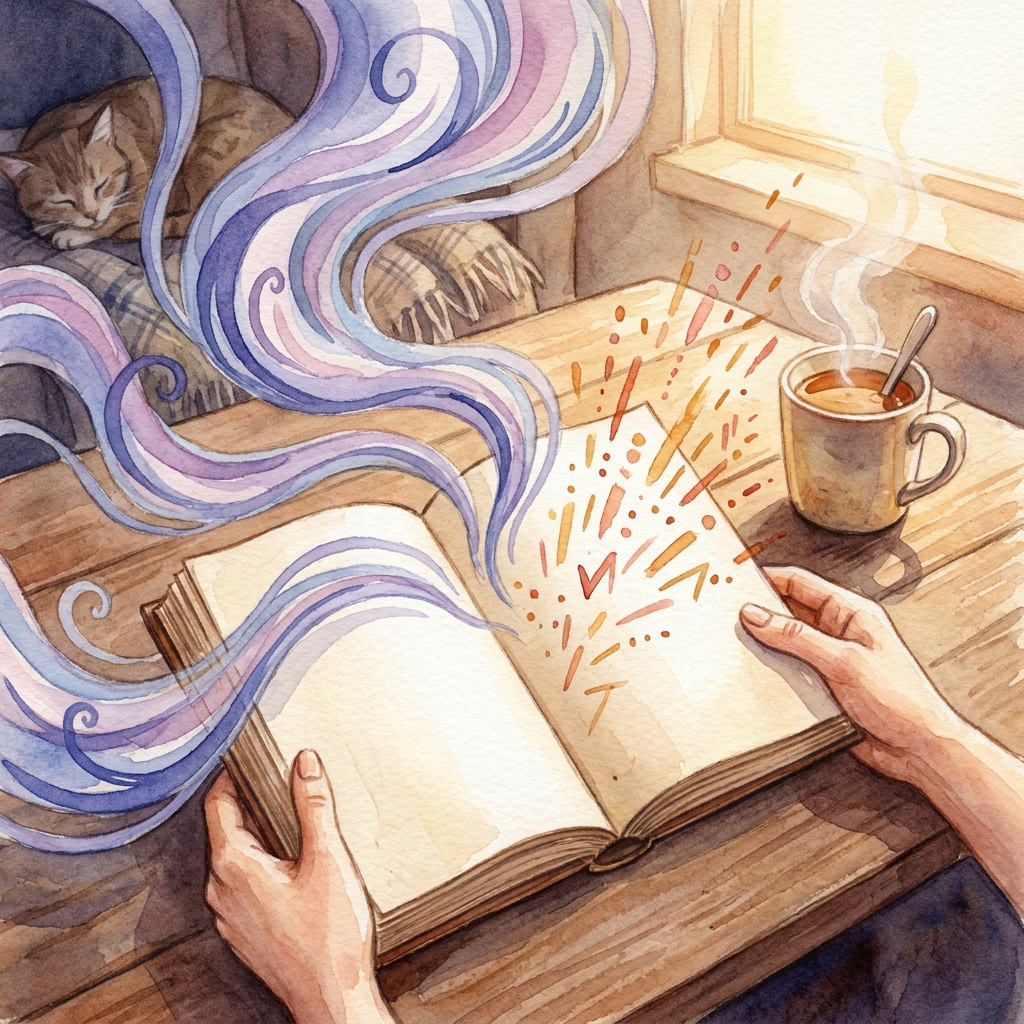
Most writers have a default sentence length. They write it through everything—action, reflection, grief, joy. They never vary it. And their prose reads flat as a result.
Sentence length is one of the most direct levers you have over a reader’s emotional state. Long sentences slow everything down. They create room for thought, for memory, for the quiet ache of a scene that asks the reader to sit and feel. Short ones accelerate. They cut.
Here’s what skilled writers do instinctively: they shorten sentences as tension rises. Look at the action climax in almost any thriller—the sentences get shorter and shorter until they’re fragments. Your heart rate speeds up not because of what’s happening, but because the prose itself is making you breathless.
In moments of grief or reflection, the sentences lengthen. They become complex, full of subordinate clauses, the way a grieving mind wanders from one association to the next before circling back to the loss.
Read three pages of your work aloud. If your sentences are all roughly the same length, you’ve got a rhythm problem—and you’ll feel it in your throat before you even finish the paragraph.
The fix: find your highest-tension scene. Any sentence longer than 10 words is a candidate for breaking. Then find your most emotionally internal scene. Any sentence shorter than 12 words might need to breathe.
Want more craft lessons like this—plus personal feedback from me? The Authors Success Bundle Pro gives you access to all 20 Writing Academy courses. Special offer: subscribe now for 70% off—just $29/month
📝 Free Manuscript Checklist
Subscribe and get the 25-point checklist my students use, plus the writing resources you choose.