Your Draft Doesn’t Have to Start at Page One
Most writers assume the manuscript works like reading—start at page one and go until “The End.” That assumption kills more novels than any craft problem.
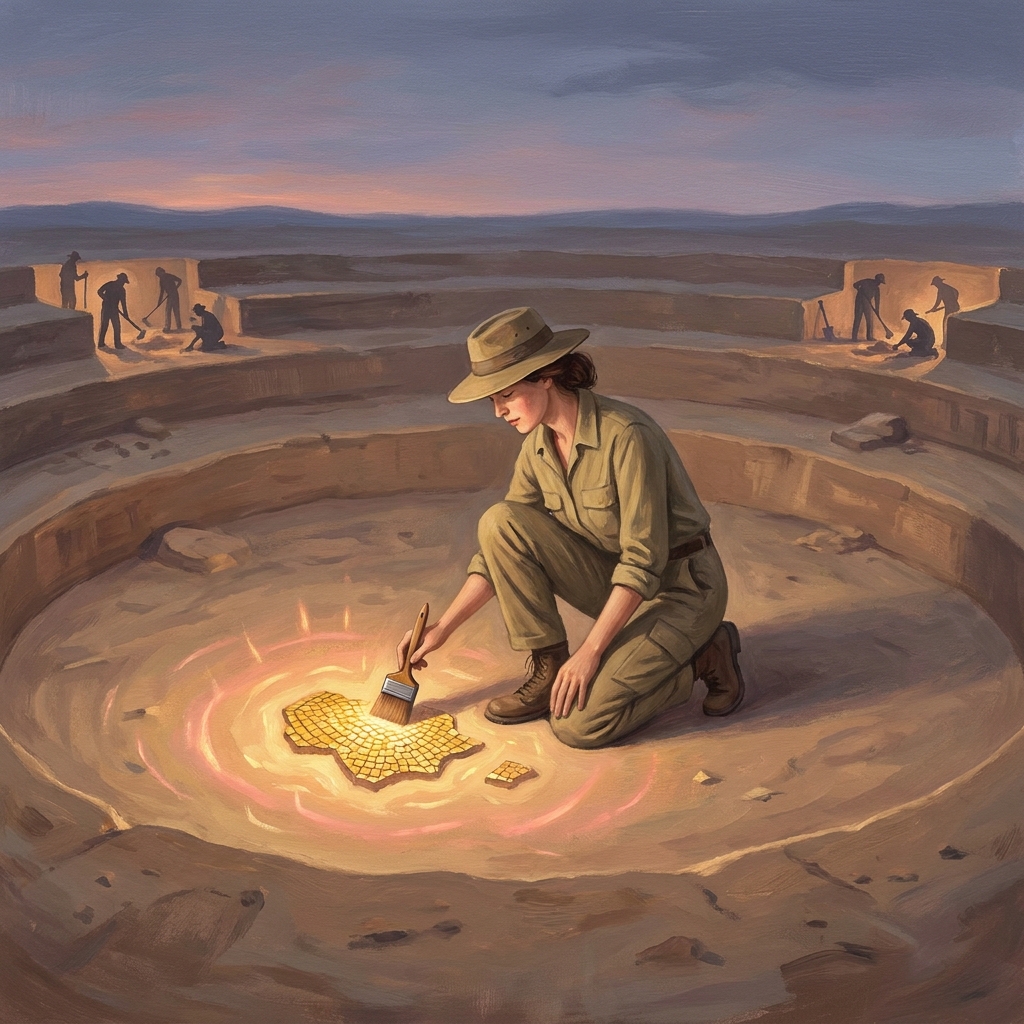
The draft isn’t the story. It’s the excavation. And no one starts an excavation at the exact edge of the site and works right to left.
When you hit a scene you’re dreading, the instinct is to push through. But dread usually means one of two things: you don’t know this scene’s purpose yet, or you’re more excited about what’s coming. Both are signals, not obstacles.
Write toward the pull. If you know exactly how the confrontation in chapter twelve plays out—the argument, the revelation, what each character loses—write it now. The chapter you haven’t reached yet doesn’t care if you’ve written chapters nine through eleven. Your job in the draft is to capture scenes while they’re alive.
The structural benefit: once you’ve written the scene you’re excited about, you can see what has to be true in earlier chapters to make it work. The draft writes the outline backward.
Exercise: Open your manuscript to where you’re currently stuck. Ask what scene, later in the story, you most clearly picture. Write that scene today—full dialogue, physical detail, emotional truth—without worrying about how you’ll get there. When it’s done, list three things that must be true in the current chapter for that future scene to pay off. Those are your road markers.
I’ve spent 25 years teaching 100,000+ students. Writing Academy now has 22 courses and 640 lessons — all included with lifetime access for just $199.