When Characters Say What They Don’t Mean
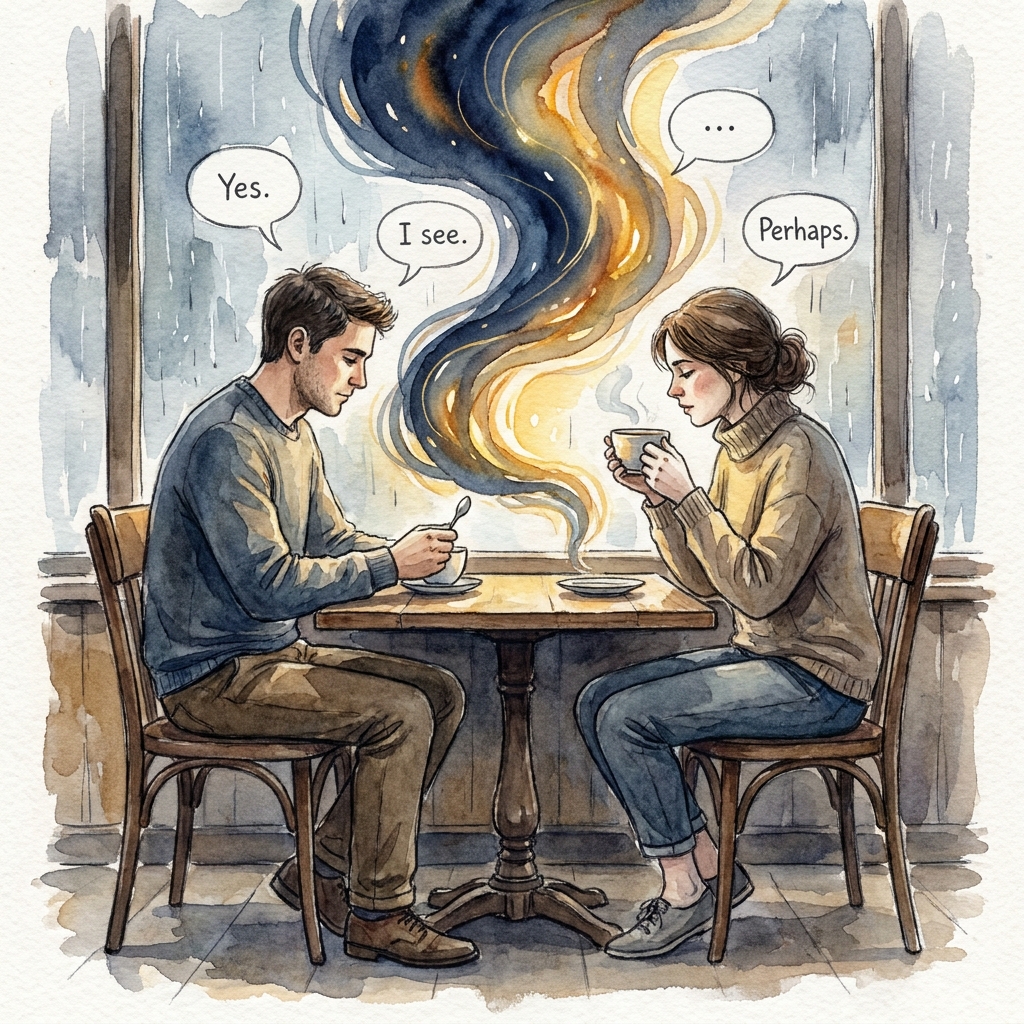
A character says “I’m fine” after learning her sister got the promotion she wanted.
She’s not fine. Every reader knows it. What earns their attention is whether she’ll keep pretending, and at what cost.
That gap between what characters say and what they mean is subtext. Most first drafts collapse it.
The writer wants to make sure the reader got it, so the character says the thing, then thinks the thing, then sometimes says it again in slightly different words. But the moment the reader supplies the interpretation, they’re invested. The moment you supply it for them, they check out.
If a character’s dialogue could appear in a press release without looking strange, there’s no subtext. Dialogue that means only what it says is information delivery, not scene.
The fix is mundane. Give your character something to do with her hands while she lies. Let her answer a question that wasn’t asked. Have her agree so quickly it sounds like arguing.
Open your current draft to any scene where two characters want different things. Cover the dialogue. Read only the action beats. If the action alone conveys the tension, the dialogue is carrying too much explicit weight. Rewrite it so it could belong to a completely different conversation—then see what the gap creates.
Continue your writing journey