The Room Shift: How Setting Reveals Emotion
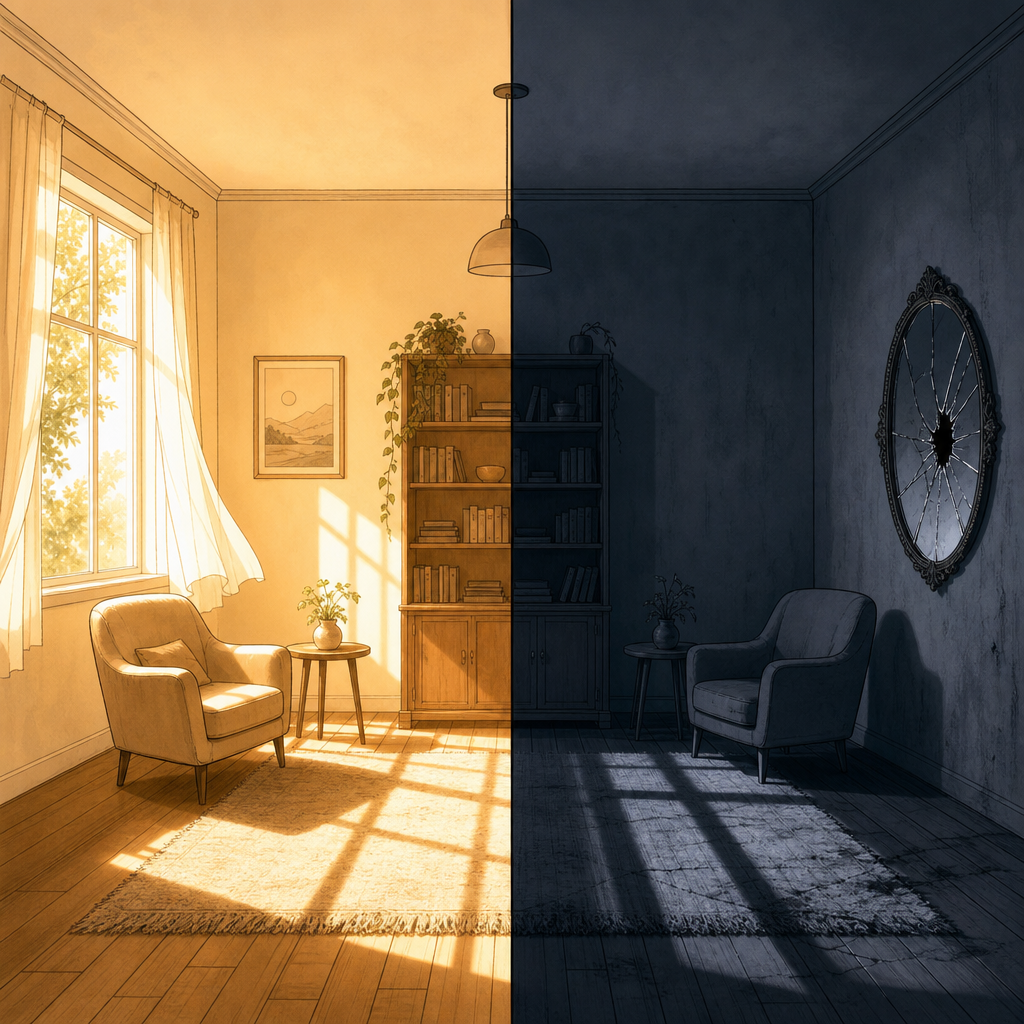
Most writers describe a room once, lock the details in place, and assume their job is done. But a physical space isn’t static; it is a mirror of your character’s mind.
A bedroom is a cozy sanctuary when your protagonist is happy. That same bedroom becomes a claustrophobic prison when she is trapped. The desk, the unmade sheets, and the shadow under the door frame don’t change—but what she notices does.
If your character has just received devastating news, she won’t notice the beautiful antique wood of her vanity. Her eyes will fix on the hairline crack in the glass, or the single dead moth on the windowsill. Her emotional state acts as a filter, sorting the environment into details that echo her internal storm.
When you describe a room the exact same way twice, you miss a massive opportunity. Use the environment to show internal change instead of explaining it. If she enters her study in chapter two and again in chapter twenty, the reader should feel her transformation purely through the shift in her surroundings.
Open your current manuscript. Find a scene where a character enters a familiar room after a major plot pivot. Highlight every descriptive word.
If the description could apply to any normal Tuesday, cut it. Rewrite the passage focusing only on three specific objects that reflect her current emotional state—a chipped cup, a dripping tap, or a stark shadow.
Continue your writing journey