Your Reader Won’t Believe Your Speculative World (Unless You Show the Grease)
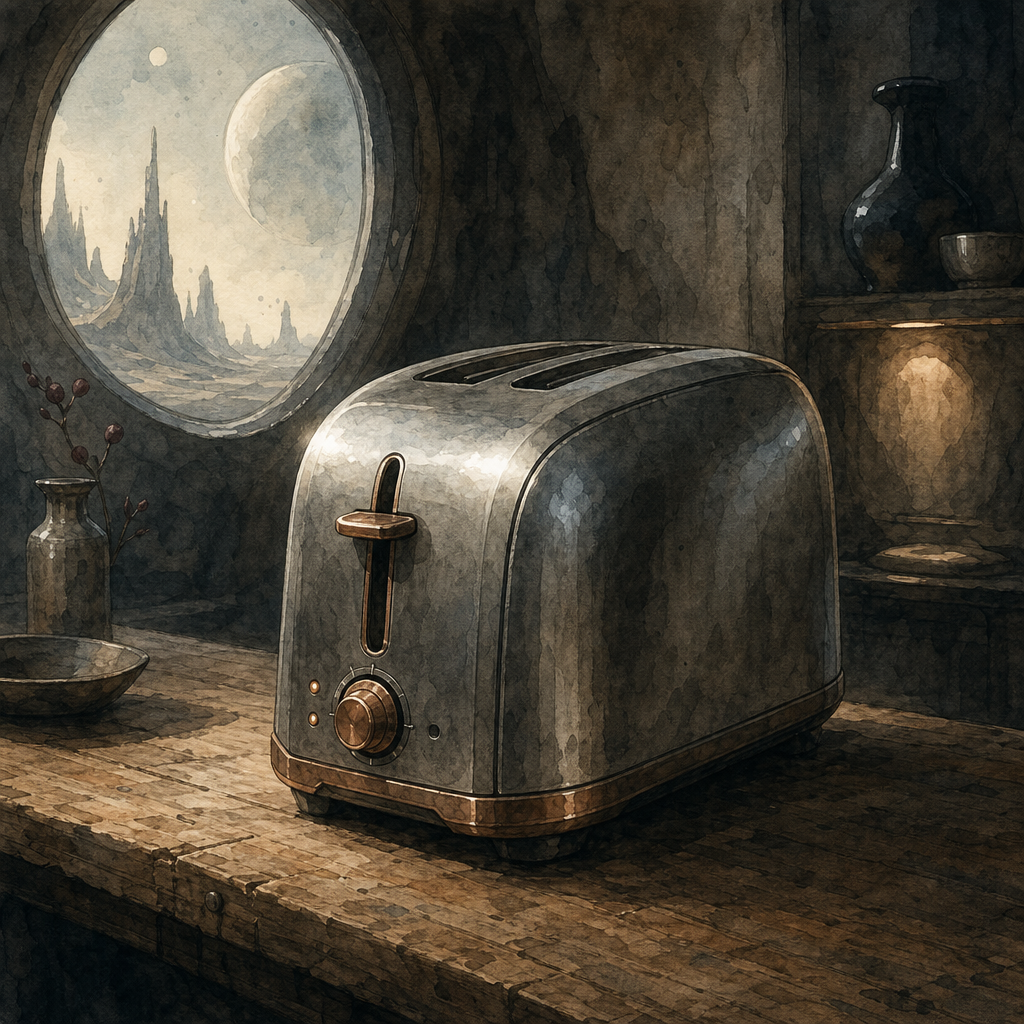
Writers building unfamiliar worlds—whether a space station, an elven forest, or Victorian London—frequently drown the reader in architectural layouts and political histories. They want us to see the grand scale. But the human mind does not connect with grand scale; it connects with domestic friction.
If your character walks into a room on a strange planet, do not tell us about the atmospheric processors. Show us how they struggle with the latch on a cabinet. If they are drinking tea in a medieval tavern, show us the grease on the lip of the earthenware mug. The extraordinary becomes real only when it is anchored by the mundane.
When a character treats the spectacular as boring, the reader believes the world. If a character lives on a floating city and complains about the damp sheets, the floating city is suddenly concrete. Semicolons and small details are what make a setting feel lived-in; they are the friction of daily life.
Open your current manuscript. Find the scene where you introduce your reader to an unfamiliar or speculative setting. Count the sentences of pure description. Now, find one everyday, physical object your character must interact with in that space—a squeaky door handle, a sticky drawer, or a cold metal bench. Rewrite the passage so the character’s physical struggle with that mundane object does the work of grounding the reader in the environment.
Continue your writing journey