The Spatial Anchor Fix for Confusing Action Scenes
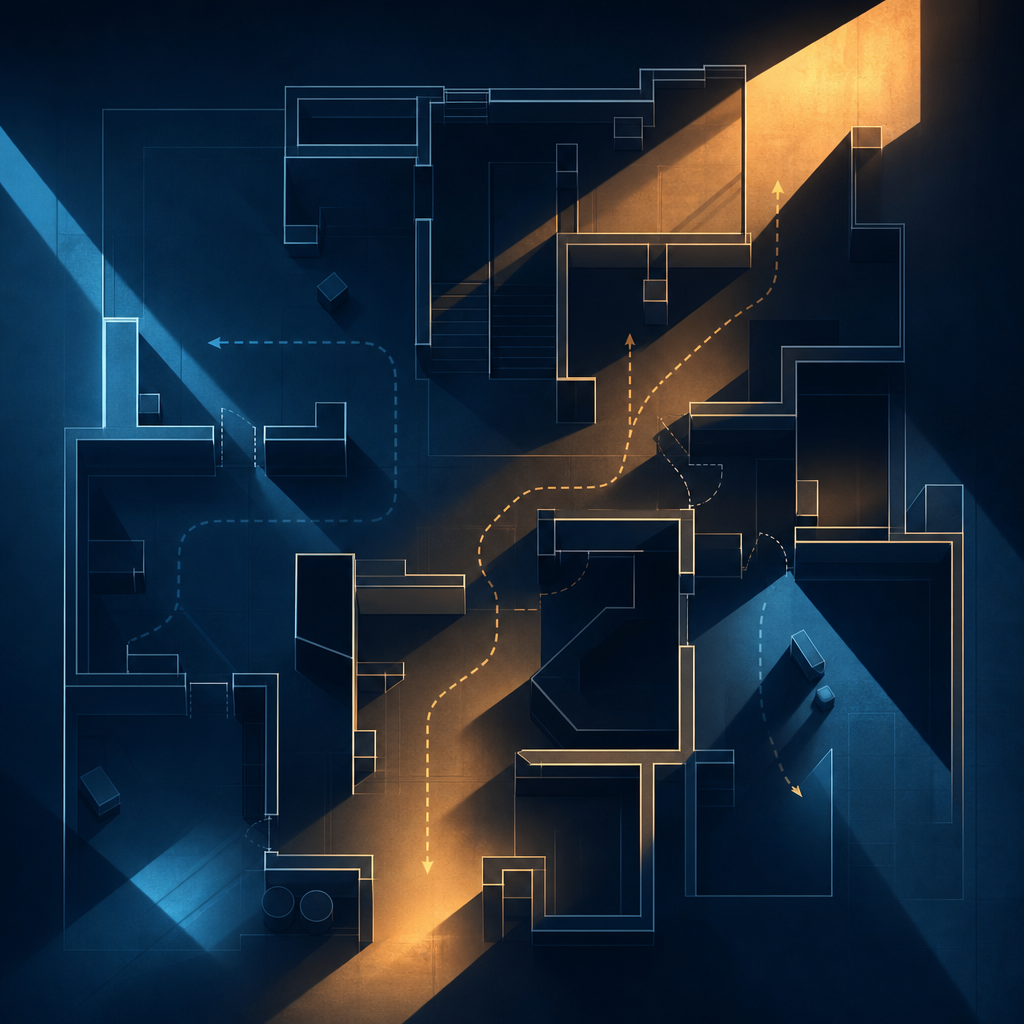
Most fight scenes fail before the first punch lands. The writer knows the geography—who’s near the door, who’s got their back to the window—but never puts it on the page. The reader is working blind.
I edited a chase scene last month where the protagonist “dove behind cover” three times, and each time cover meant something different: a car, a dumpster, a low wall. Nobody could follow it, because nobody had been handed a map.
The description is usually there. It just shows up after the punch lands, explaining the wall someone already crashed into, the table already knocked over. By then it’s too late; the moment’s already blurred. Orient the reader before the movement starts, not after.
One clear sentence, planted before the chaos, telling the reader where the walls are, what’s breakable, what stands between the characters. After that, you can move fast. The reader already has the floor plan; they just watch the actors cross it.
Open your last action scene: a fight, a chase, an argument that turns physical. Find the line where a character first moves. If a reader couldn’t sketch the room from what’s on the page, add one sentence of spatial anchor before the movement: what’s to the left, what’s behind them, what they’d have to get past. Reread the scene and see if the blocking finally holds together.
Writing Academy has 22 courses and 640 lessons covering craft from every angle—structure, POV, voice, pacing, scene work, and more. All included with lifetime access for just $199. Browse the courses here.