The Verbs Hiding Behind “Was”
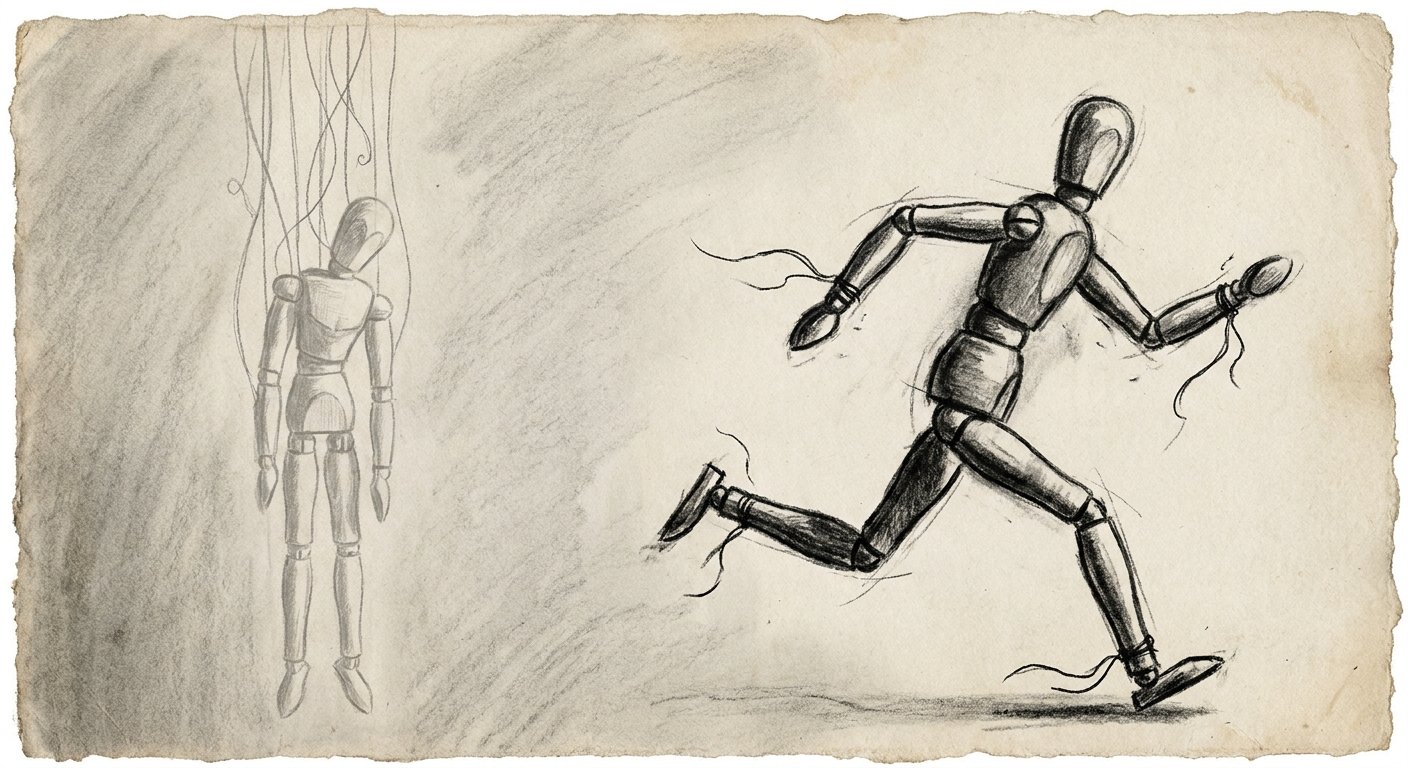
The quietest energy leak in a manuscript is the verb.
“She was walking to the door.” “The letter had been left on the table.” “It had been decided.” Something happened in every one of those sentences, but nobody did it.
Passive phrasing moves the actor backstage and lets the action just sort of occur. Orwell’s rule from “Politics and the English Language” still holds: never use the passive where you can use the active. He meant prose that can’t commit.
“She was walking to the door” becomes “She crossed to the door.” Or “She fled to the door.” The verb you pick is free characterization. “Was walking” hands the reader nothing but forward motion.
Past perfect is where the fog multiplies. “She had been sitting, waiting, thinking” collapses a paragraph into haze. “She waited” does the same job with a pulse.
Not every “was” deserves the ax. Sometimes “was” is just true. But every single one is a decision point, and most writers skip it entirely.
Search your manuscript for “was” and “had been.” At each hit, either keep it or find the verb that names what actually happened. Most of the time the stronger verb is already in your head. It was just standing behind the weak one, waiting for permission.
Writing Academy has 22 courses and 640 lessons covering craft from every angle—structure, POV, voice, pacing, scene work, and more. All included with lifetime access at Writing Academy.
#WritingCommunity #AmWriting #Editing #PassiveVoice #AmEditing #StrongVerbs