The That Test
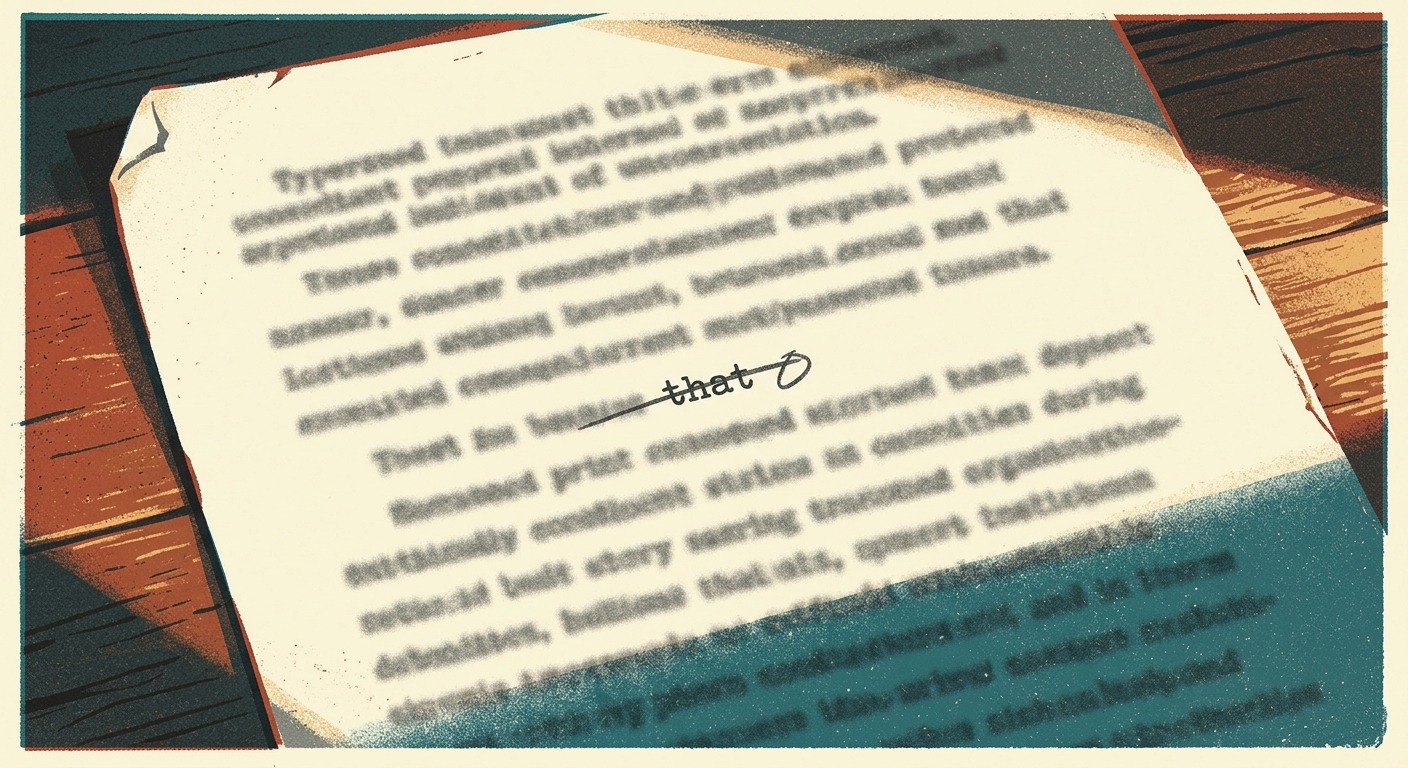
“That”s are usually dead weight. In most drafts, most of them come out.
“She said that she’d come” works as “She said she’d come.” “I knew that it would rain” doesn’t need the word either. The that is a hitch in the breath, a habit borrowed from speech, and it slows every sentence it sits in. Cut it and nothing is lost but length.
Not all of them. Two jobs survive.
Keep the that that prevents a misread. “He claimed that Tuesday was the deadline”: remove the word and the reader briefly parses “he claimed Tuesday.” The ear catches it. If the sentence stumbles without the word, the word stays.
And keep the sorting that. A clause without commas narrows the field: “the key that opens the cellar door” tells you which key. This is where that earns its keep. In American usage, that’s where “that” belongs. Nonrestrictive facts take which: “the cellar door, which stuck in winter.” (British usage lets which do both. Pick a country and stay in it.)
So the search isn’t a purge. It’s a sorting machine. Every that you meet is either dead weight or a signal telling the reader which one you mean.
Run the search on your draft and read every that twice — with it, and without. Delete each one where the sentence means the same thing and moves better. For the survivors, ask which one: if the clause is picking one out of many, it stays.