Accuracy You Can Feel, Dates You Cannot
Historical novels rarely sink over a wrong year. They sink because the writer keeps stopping the story to prove the year.
Readers can’t fact-check 1812 while they read. They check feel: money feels heavy, distance feels slow, an unmarried woman’s choice feels narrow. Dates are the skeleton. Texture is the ride.
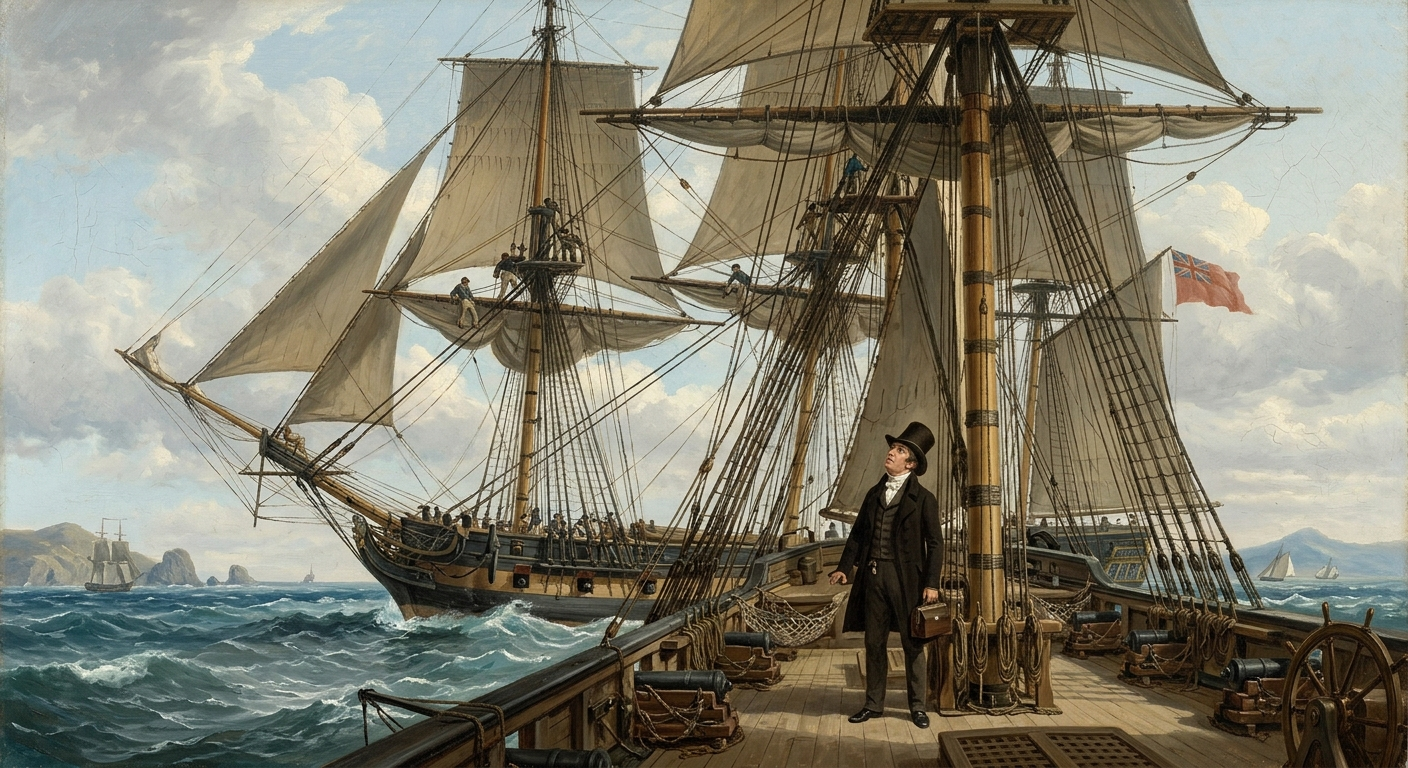
In Patrick O’Brian’s Master and Commander, decades of Royal Navy research ride inside the action. Stephen Maturin comes aboard knowing nothing about ships. He bungles the terms, asks what a boy sailor would laugh at, and the story never stops to define a halyard. The words wash past. Three books in, you can picture the rigging. Nobody lectured you.
The reverse holds. Readers ride past words they don’t know, but a false note breaks the spell. Not a textbook anachronism; a character who thinks like a therapist in 1850, a servant bored by the class system. That is the accuracy you can feel: what people feared, what cost too much, what nobody said aloud.
Pull up your last chapter set in another era. Circle every fact the character isn’t using: a date, a price, an invention, a custom’s name. Cut it, or put it in someone’s hands. A fact a character uses reads as life; the same fact floating loose reads as a museum label.
#WritingCommunity #AmWriting #HistoricalFiction #WritingTips #WritingCraft #ResearchTips