Backstory Reads Best Out Loud
Every manuscript has a stretch where the story stops for a history lesson. Who married whom, who left when, delivered like a museum placard. The reader skims; the skimming is the tell.
Narration dumps backstory. Dialogue delivers it. Readers never skim speech; the most readable vehicle for the past is a conversation where the listener needs it.
The failure mode: “As you know, Colonel, we buried your brother the night before the invasion.” When both characters already have the information, readers feel the lecture coming.
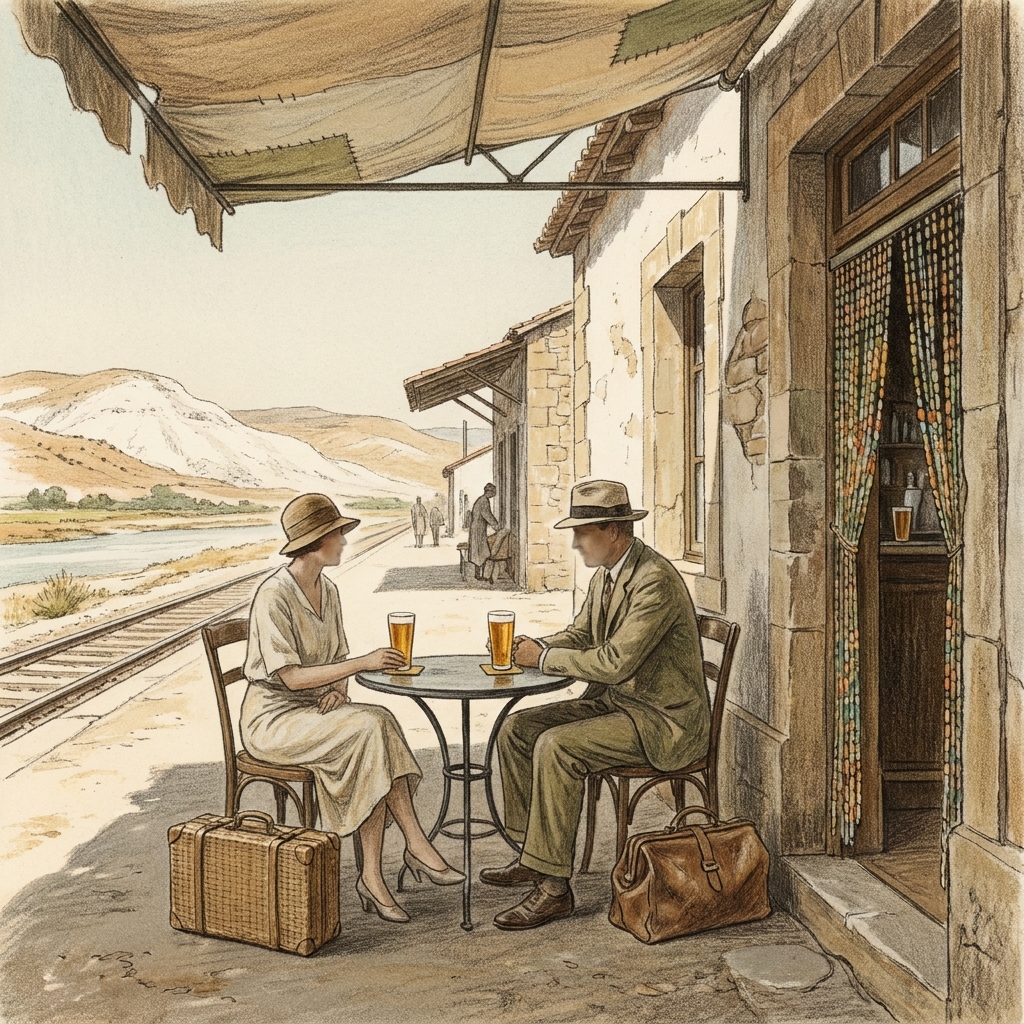
Hemingway delivers years of a relationship in three lines at a Spanish railway station, in Hills Like White Elephants.
“They look like white elephants,” she said.
“I’ve never seen one,” the man drank his beer.
“No, you wouldn’t have.”
He never sees anything her way, and she has stopped expecting him to. The reader does the math.
Give the past a real listener: a stranger, a new partner, the sibling who stayed away. Whoever doesn’t know asks the reader’s questions.
Make the telling cost something. Nobody recites history on request; people deflect, quit halfway, pay in flinches.
Let answers be partial. A fragment withheld is characterization; the reader assembles the rest.
Try it: take your most explanatory paragraph of backstory and rewrite it as an exchange your character doesn’t want to finish. Give them one question to refuse.