If Your Last Line Explains the Theme, Cut It
Most writers try to land their ending with a thematic statement. “And that was when she understood that home wasn’t a place, it was a choice.” The reader closes the book and the sentence evaporates. It sounded profound for half a second, and then it was gone.
Great last lines don’t explain. They show you something specific, and they stop.
Think about the endings that stuck. Gatsby’s green light. Plath’s fig tree. The final image of The Road. None of these tell you what to feel. Each plants a picture, and the picture does the thematic work. You remember the image because images live in a different part of the brain than statements. A summary dissolves. A picture stays.
The instinct to summarize comes from a good place. You’ve spent 300 pages building toward a meaning, and you want to make sure the reader gets it. But the reader already got it. Every scene, every conversation, every choice the protagonist made already delivered the theme. What you need now is something small and concrete. A focal point that gathers everything into a single picture.
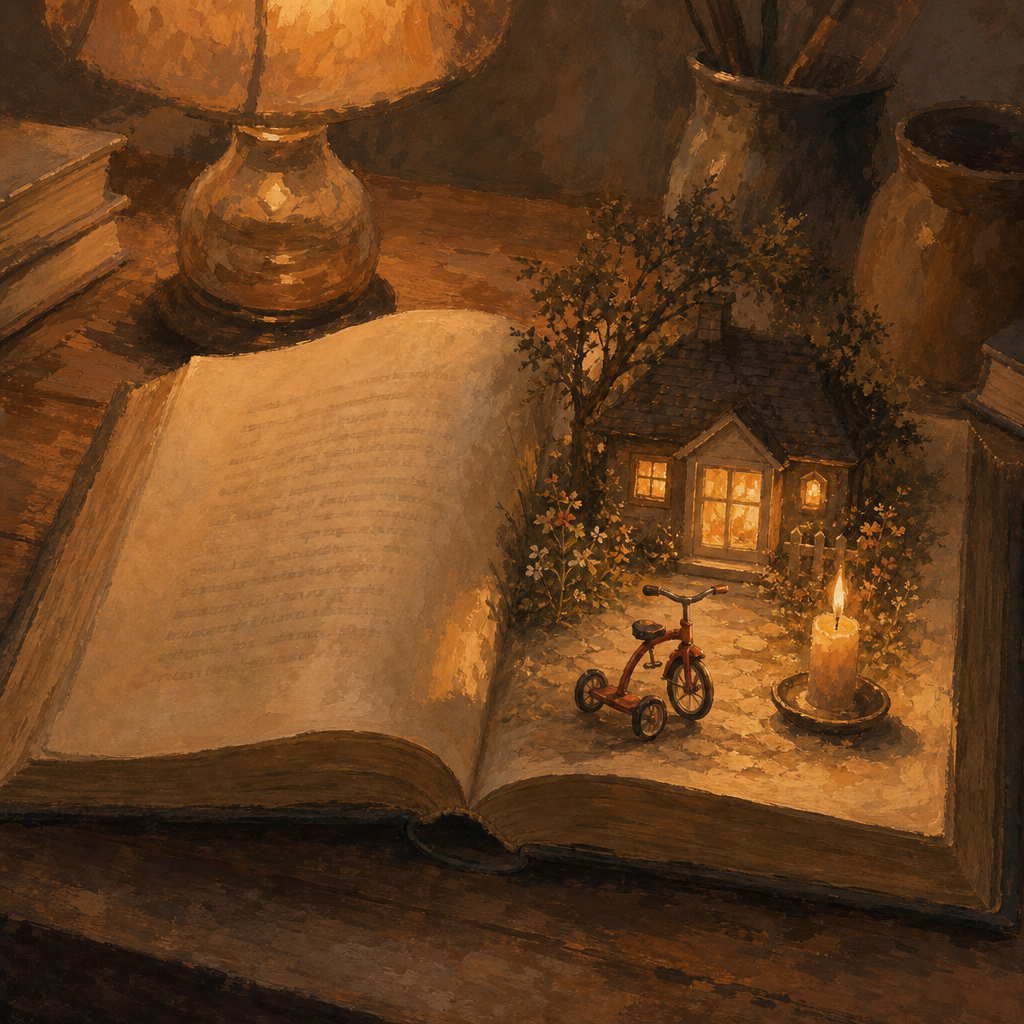
Cut your last line. Read the final paragraph without it. If the paragraph already has an image, stop there. If it doesn’t, write one. A woman hanging up a coat. A dog sleeping in a patch of light. A child’s bike left in the driveway.
Open your manuscript to the final page. Find the last sentence. Is it a statement about what the story means, or is it a picture? If it’s a statement, cross it out and write the smallest, most specific image you can find in the world you’ve built. That image is your real ending.
Continue your writing journey