Narrate the Butter Like a Moral Crisis
Comedy dies on the page when the writer starts grinning. The narration winks, the jokes get announced.
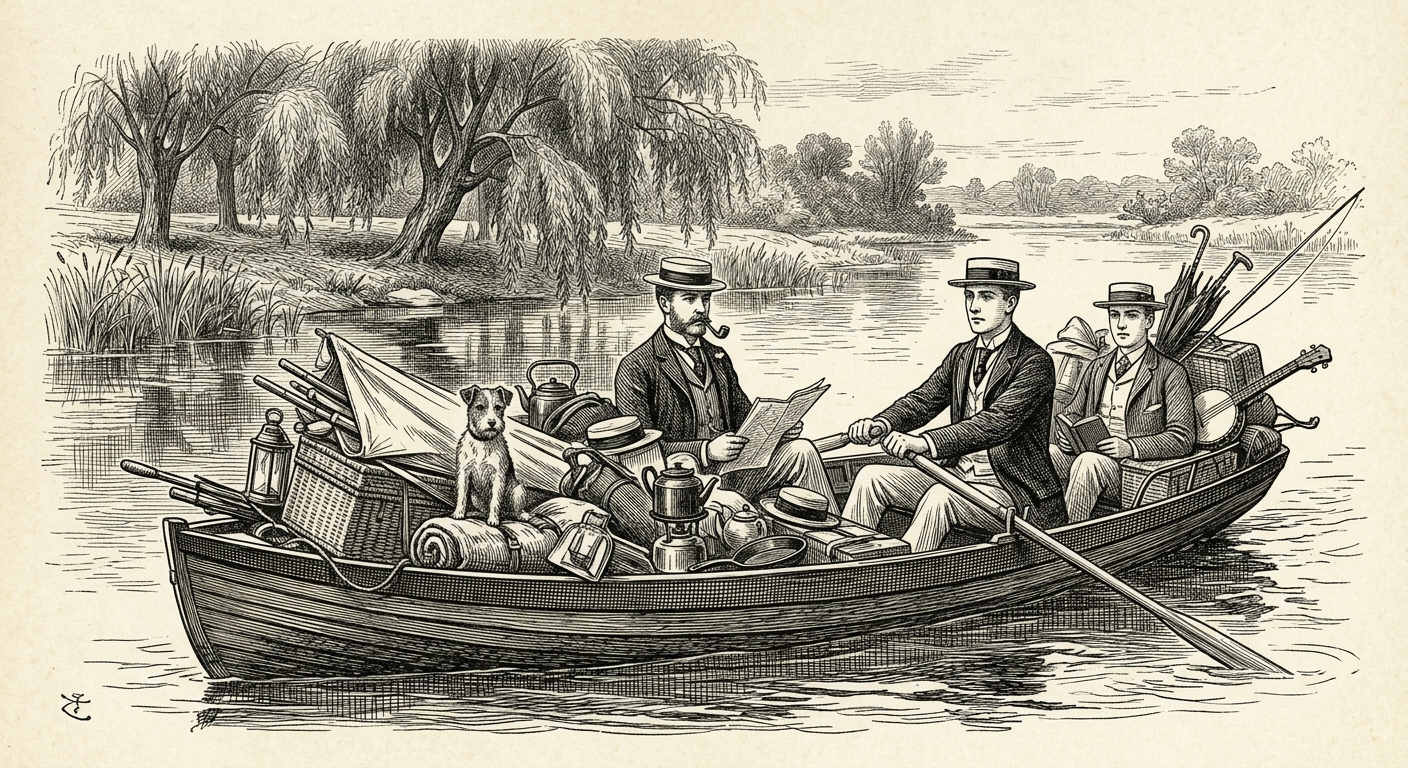
In 1889, Jerome K. Jerome published a book about three men and a dog boating up the Thames. Almost nothing happens in it. It has never been out of print.
Three Men in a Boat runs on one machine: the voice never suspects it’s being funny. Jerome narrates a packing scene like a polar expedition. Harris sits on the butter and the prose treats it as a moral crisis. Uncle Podger hangs a picture with six drafted relatives, a smashed thumb, and an entire evening, reported with parliamentary gravity.
The gap between the register and the subject is the joke. And under the deadpan, the machinery is strict: every set piece is a small catastrophe built on flawless cause-and-effect, the disaster visible from the first line. The laugh lands when it finally arrives.
Take the scene that’s supposed to get a laugh and read the narration alone, dialogue skipped. Every “hilariously,” every “to his embarrassment” is the writer winking, and it’s costing you. Rewrite those sentences with total gravity, then check the machinery: a laugh should be caused by a reasonable decision two lines earlier. Cut the jokes nothing caused.