The Camera Gets One Chair
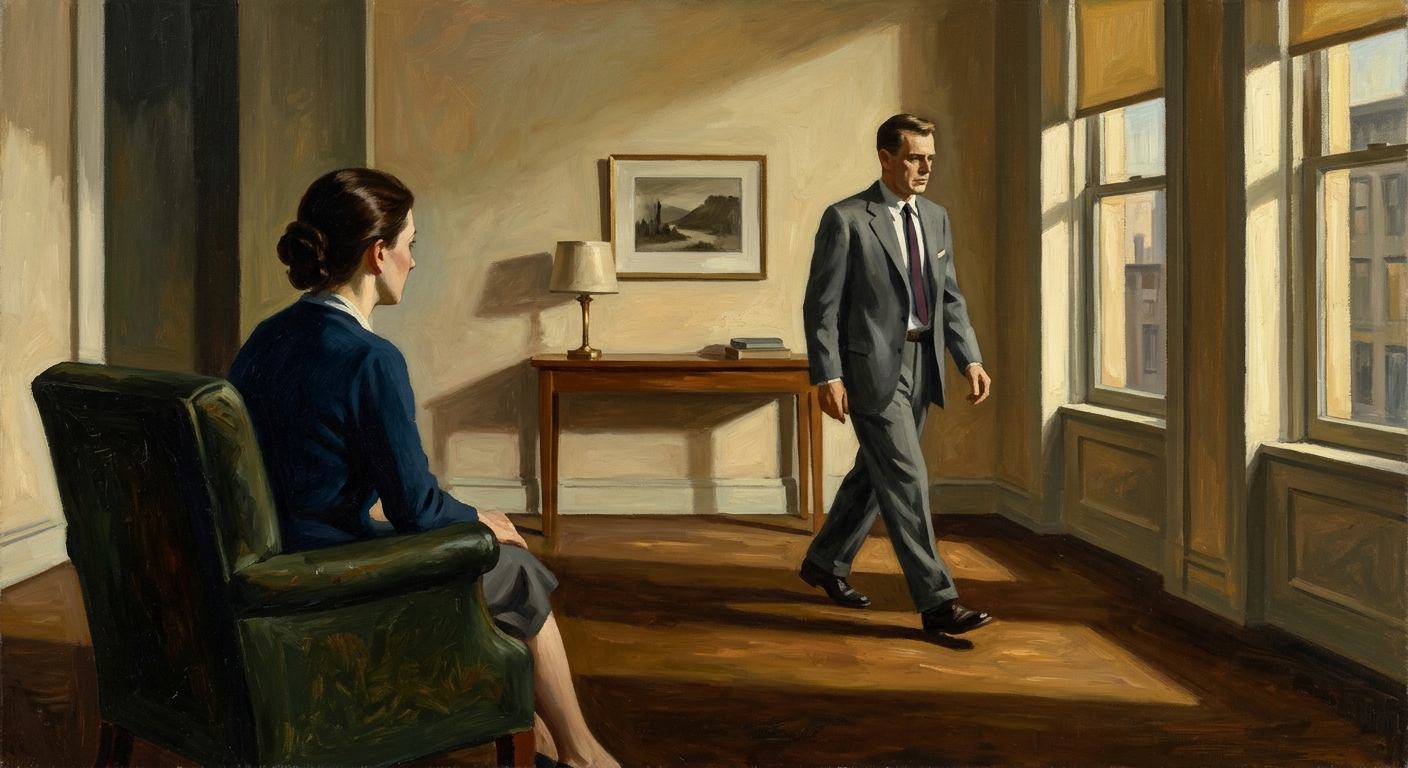
Close third person makes a promise: everything in this scene passes through one character’s perception. What she notices, what she fears, what she gets wrong.
Head-hopping breaks the promise mid-paragraph. Three sentences into Alice watching Mark cross the room, the narration adds: “Mark wondered why she’d invited him.” Now the camera sits in two heads. The reader feels the floor move.
The cost is trust. Alice misreads Mark’s face, and the reader, locked in with her, misreads it too. That shared mistake is the tension. Peek into Mark’s head and you’ve shown the reader an escape hatch: whenever a scene gets uncomfortable, the narration will bail to whoever knows more. They stop believing the camera will stay put, and they stop investing in what Alice doesn’t know, because it clearly won’t last.
One head per scene is the rule. If Mark’s interior matters, Mark gets the next scene; viewpoint changes happen at scene breaks, where the reader expects them. Inside Alice’s scene, Mark can only do what people do in real life: speak, move, show a face she has to interpret. Her interpretation can be wrong. That’s where the drama lives.
Find your most recent two-person scene and reread every line outside the dialogue. Any sentence reporting the thoughts or feelings of someone other than the viewpoint character is a hop. Rewrite it from inside her head: what she sees, and what she’s afraid it means.