Where Your Writing Voice Actually Lives
Writers spend years trying to “find their voice.” Most are looking in the wrong place.
Voice doesn’t live in adjectives or sentence length. It lives in what your narrator notices.
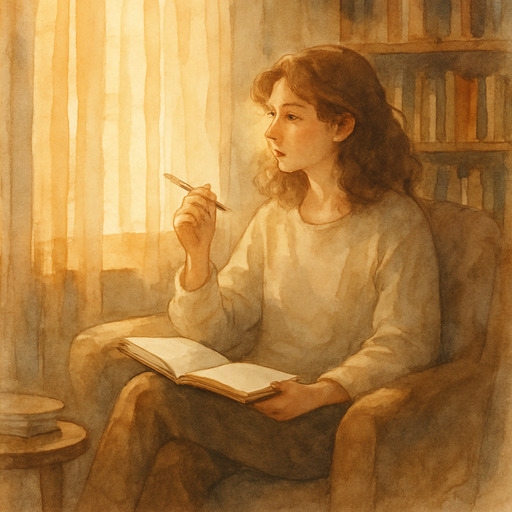
Pick a room. One writer sees the dirty dishes and thinks about who left them. Another sees the light on the curtains and thinks about the time of day. A third sees the empty chair. Same room. Three completely different people—and three different stories.
The ones who struggle most with voice are usually trying to write like someone they admire. That’s not how it works. Voice is what emerges when you stop trying to sound like a writer and start trusting what you find interesting.
Here’s a test: read a paragraph of your own work and ask, “Could anyone else have written this?” If the answer is yes too often, you’re not looking closely enough.
Go back to a flat paragraph in your draft. Forget what the scene needs to accomplish. Ask: what does this narrator actually notice first? Cut the generic observations. Trust the specific, weird ones. Those are yours.
Open that flat paragraph and list every detail your narrator observes. Circle anything generic—the oak desk, the rainy window, the smell of coffee—details that could belong to any novel by any writer. Cross those out. What survives the crossing-out is your voice; if nothing survives, start the paragraph over and write only what this specific person would notice first, in this room, right now, and what it would remind them of.
Continue your writing journey
This topic is covered in depth in our Novel Writing Workshop.