Your Characters Keep Frowning Through Every Emotion
“She frowned.” “He looked angry.” “She smiled sadly.”
Three guesses what the reader actually sees. Nothing. A blank face doing a generic thing.
Frowning is the default setting for a face. Telling me a character frowned is like telling me water is wet. The reader’s brain skips right over it.
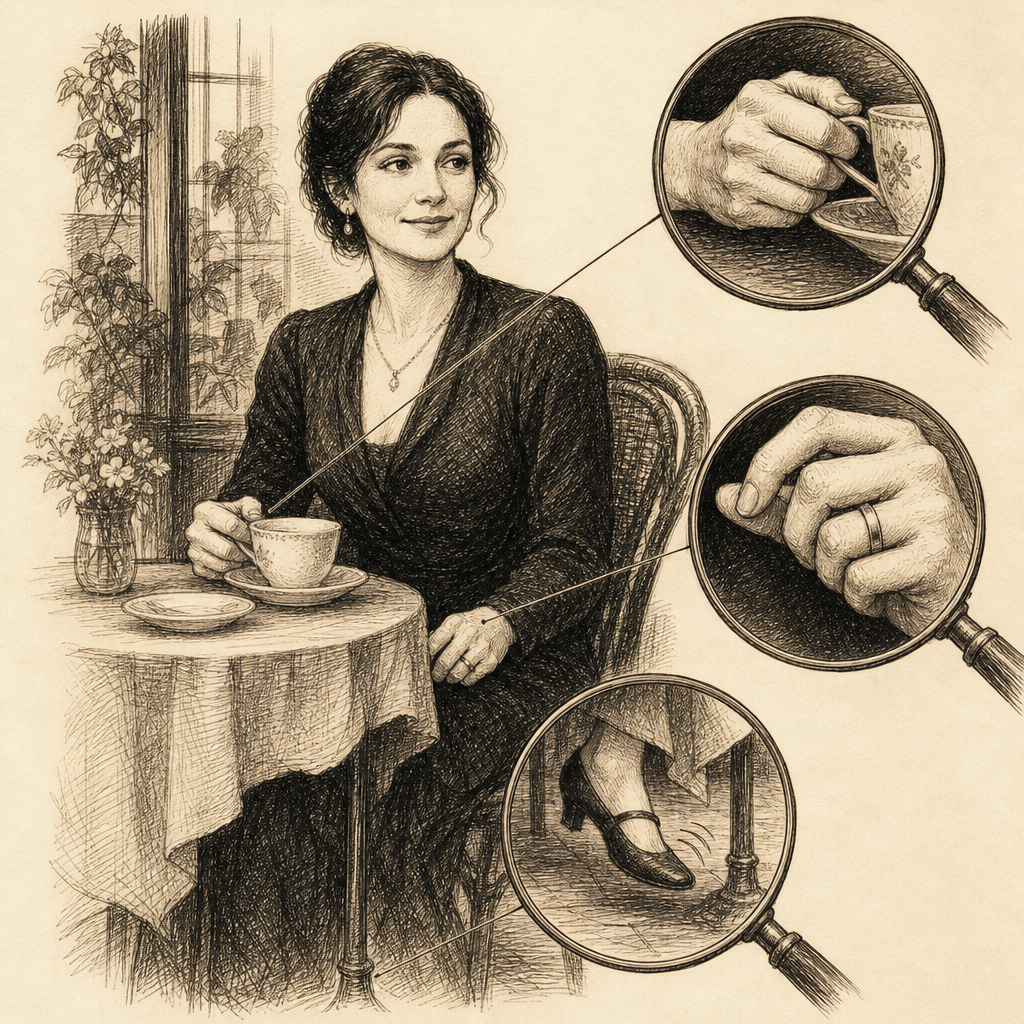
Real people leak emotion through specific, unconscious gestures. The thumb pressing hard against a wedding ring. The jaw muscle flexing above a polite smile. The way someone keeps straightening a napkin that’s already straight. These are the details a reader remembers because they’re physical. They happen in the body, not on a label.
Elmore Leonard built entire characters out of fidgeting. Raymond Chandler‘s Philip Marlowe reveals himself through what his hands do with cigarettes and glassware. The gesture is the character.
The problem with “she frowned” is it names the emotion instead of showing the body betraying it. The reader gets the summary, not the evidence. And evidence is always more convincing than assertion.
Open your current draft. Search for these words: frowned, smiled, glared, sighed, nodded, shrugged. Every hit is a placeholder. Replace each one with a specific physical action a stranger could identify from across a restaurant. “She pulled her sleeve over her fist and held it there.” “He lined up his fork parallel to his knife, then checked it again.”
If the gesture contradicts the dialogue, even better. The contradiction is where character lives.
Continue your writing journey