Your Most Important Scene Belongs Offstage
The confrontation your reader has been waiting for, the screaming match, the betrayal, the breakup, happens in chapter fourteen. And you write every word of it.
That’s usually a mistake.
The scenes readers remember most are the ones they never see directly. The fight your parents had behind a closed door when you were eight hit harder than any argument you witnessed firsthand. You built the whole thing from sound and silence. Your brain did the work the writer would have ruined by showing too much.
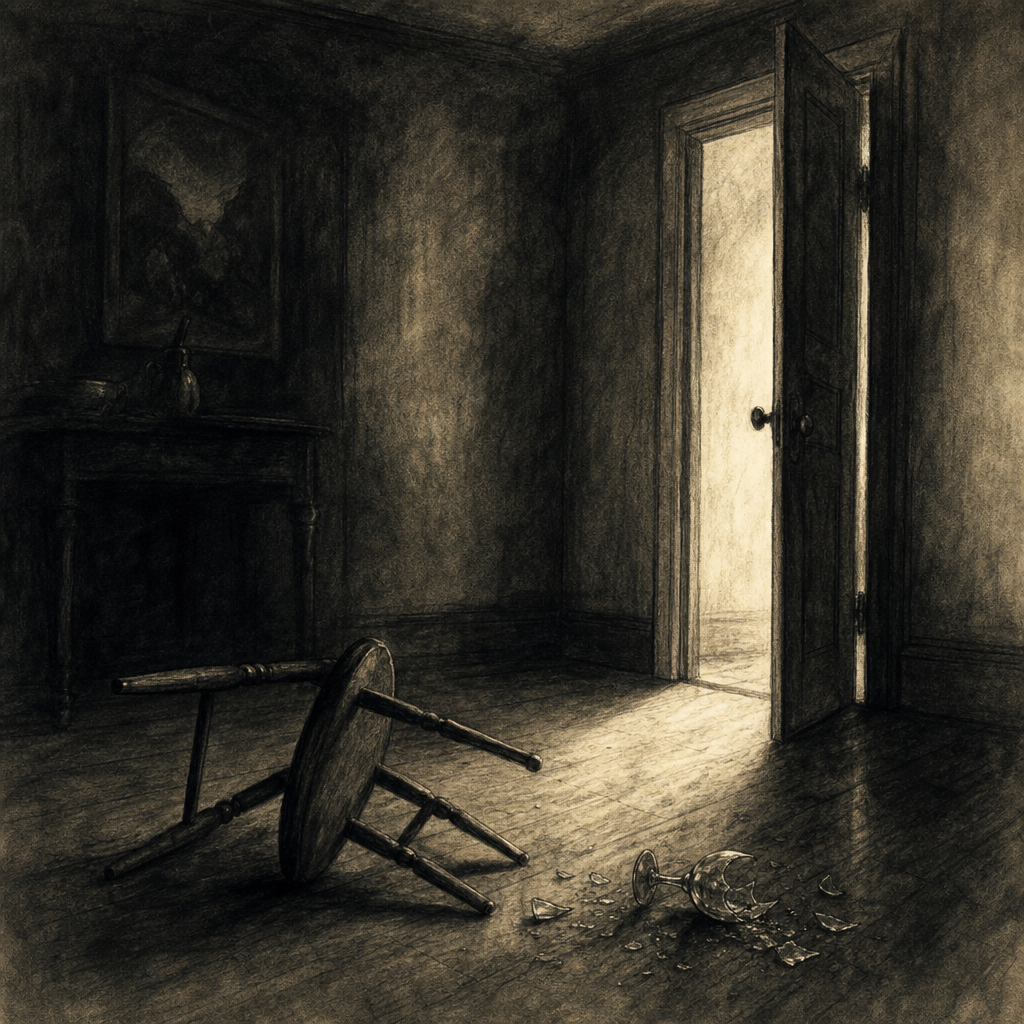
Fiction works the same way. Skip the confrontation. Jump to the aftermath. Your protagonist sits in the car in the driveway, engine off, keys still in the ignition. Ten minutes have passed. The front door is still open behind her. She hasn’t moved.
The reader constructs the fight from evidence: shaking hands, a phone on the passenger seat with a half-typed message, the fact she drove home but can’t bring herself to open the car door. Every detail is a clue. The reader assembles the scene you didn’t write, and their version is more vivid than anything you could have drafted because it’s built from their own emotional memory.
Hemingway knew this. The old man’s worst night happens between chapters. We see him before and after, never during. Tolstoy does the same thing with Anna Karenina. He gives us the train, then jumps past the impact.
The bigger the emotional event, the more the reader should have to work to reconstruct it.
Open your current draft and find the most emotionally charged scene. Cut it. Replace it with what happens twenty minutes later. Someone alone with the wreckage, dealing with the evidence. Let the debris tell the story.
Continue your writing journey