Your Sci-Fi World Feels Like a Museum Exhibit
Most science fiction worlds fail because the writer explains them.
You can tell within a page. Two scientists explain quantum drives to each other though they both already know. The seams show. The world feels like a museum exhibit with little placards.
After 25 years of reading student manuscripts, here’s the rule: a believable world is one the characters take for granted.
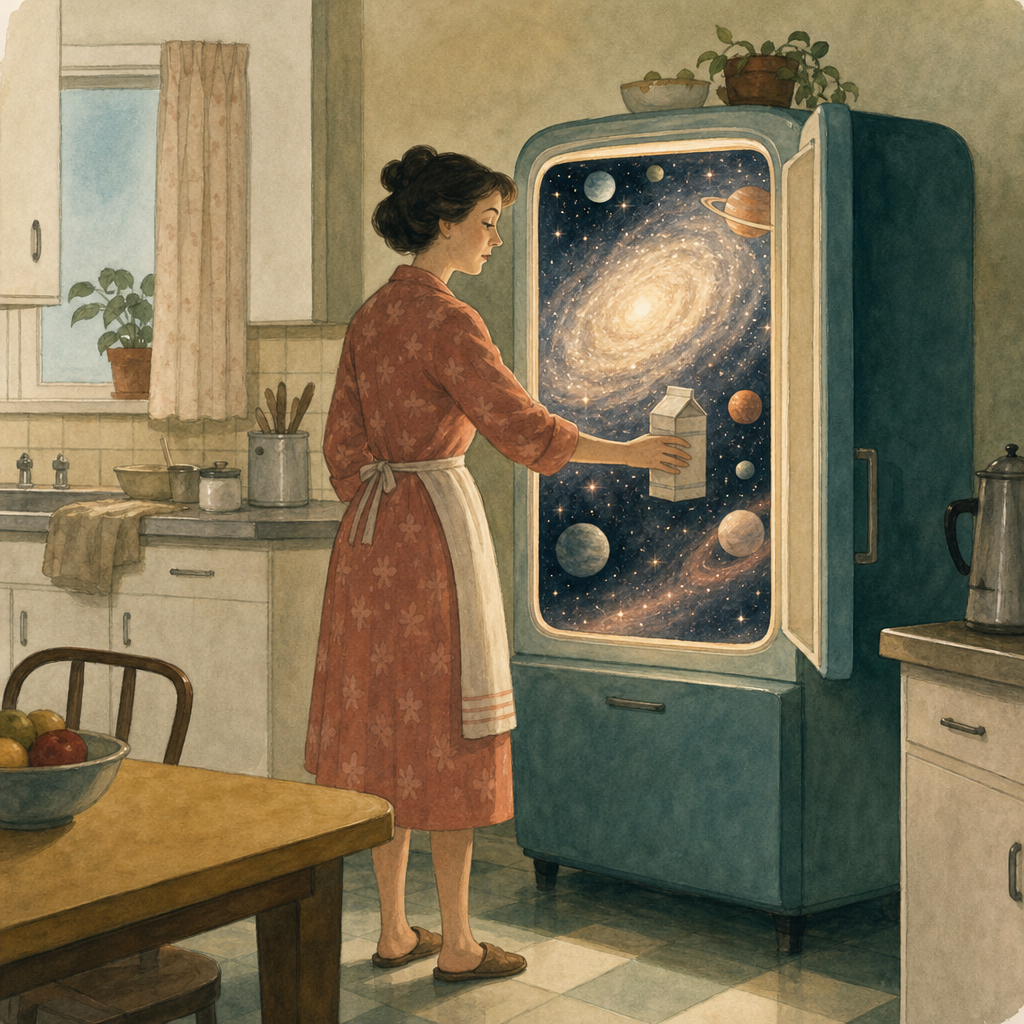
Nobody in your kitchen explains how a refrigerator works. You open it, grab the milk, complain it’s almost gone. The technology is invisible because it’s ordinary. Your characters should treat their flying cars and neural implants the way you treat your toaster — as furniture, not miracles.
The reader doesn’t need the manual. They need to watch someone use the thing carelessly and infer the rest.
Ursula Le Guin never stops to explain how the ansible works. We learn it’s instant communication across light-years because characters get impatient when a message is delayed. The wonder lands harder because she trusts us to keep up.
Try this. Open your manuscript and find every passage where a character explains your world to someone who already understands it. Now rewrite one as a scene where someone uses that technology and something small goes wrong — the implant glitches, the ration card gets declined. Let the malfunction teach the reader what the explanation was trying to. The complaint reveals the rule.
Your job isn’t to build the world. It’s to let the reader catch it being used.
I’ve spent 25 years teaching 100,000+ students. Writing Academy now has 22 courses and 640 lessons — all included with lifetime access for just $199.