Your Reader Can’t Grieve a Place They’ve Never Been
When the plot takes something from your character, the reader should feel the theft personally. Most of the time they don’t.
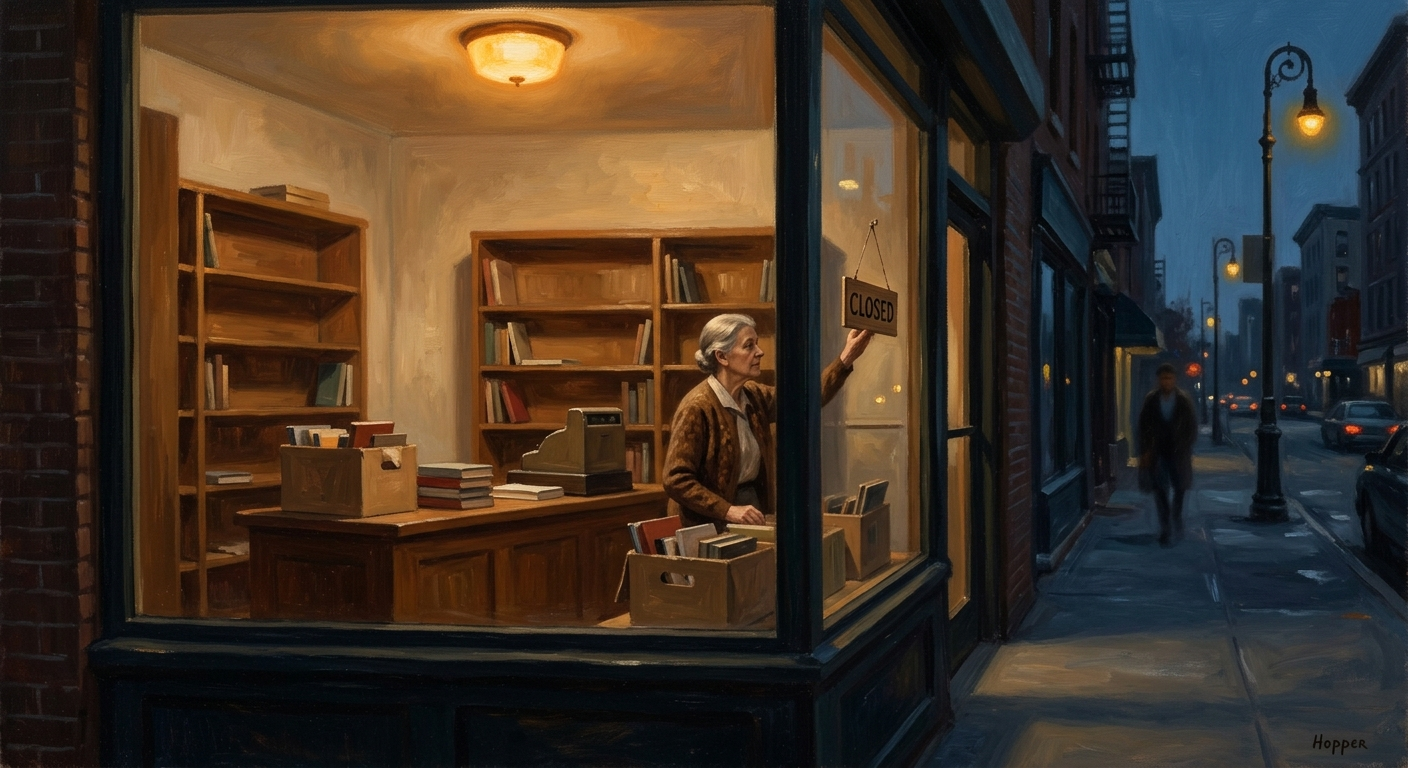
Watch You’ve Got Mail again. Kathleen loses her children’s bookstore, and it wrecks you, because you’ve spent the whole movie inside it. You know the rocking horse. You know storybook hour. By the time she switches off the lights for the last time, you’re not watching a business close; you’re watching a version of herself end.
That’s the step writers tend to skip. You can’t take a place from your character until the reader has lived there. Loss has to be specific to hurt. “She lost her job” is information. “She stacked the last picture book and turned off the lamp she’d flipped on every morning for ten years” is grief.
Most of us do this backwards. We rush to the loss because it’s dramatic, then wonder why the scene reads like plot machinery. It’s a funeral the reader wasn’t invited to.
Go to the scene where your character loses the thing—the shop, the house, the marriage, the belief. Count backward from it. Have you given the reader at least two scenes where they simply get to be in that place? No threat, no foreshadowing, just ordinary life. If not, write one. Small is fine. The morning routine, the regulars, the mess. Then let the loss come. It’ll land the way it’s supposed to.
Writing Academy has 22 courses and 640 lessons covering craft from every angle—structure, POV, voice, pacing, scene work, and more. All included with lifetime access at Writing Academy.