The Reader Knows
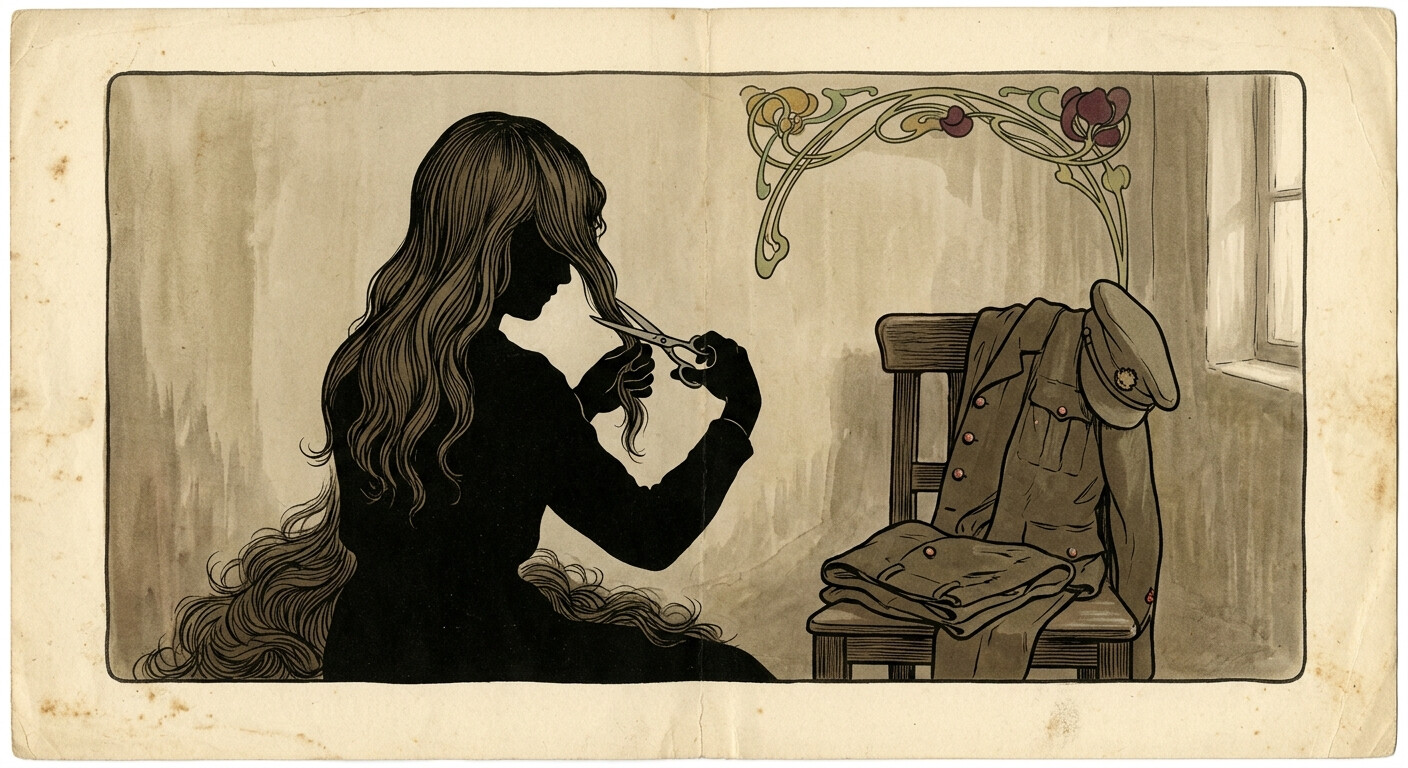
One of fiction’s oldest devices is a person in disguise. Shakespeare built a whole comedy on it. The device survives because its engine is structural: dramatic irony. The reader holds the secret. The characters do not. Every scene between them runs two currents at once – what it means on the page, and what the reader knows it could mean.
Scott Westerfeld’s Leviathan works the device about as well as it can be worked. Deryn Sharp passes as a boy to serve in the British Air Service, aboard a living airship, in an alternate 1914. The reader knows from the first pages. Prince Alek does not. And here is the book’s specific move: the bond between Deryn and Alek, and the romantic tension inside it, develops while the disguise holds. The affection is real and established before the reveal. So the reveal does not start anything; it re-prices everything, and then the relationship has to survive the truth.
The disguise also has stakes of its own. What Deryn is protecting is her place in the Air Service, the life she wants more than any ordinary one. Discovery would cost more than embarrassment; it would cost the sky.
Three mechanics make it work.
Give the reader the secret early and completely. Then let every shared scene play at double meaning.
Build the bond before the reveal. A payoff that re-prices an established relationship beats a switch that starts one.
Give the disguise something to protect. The secret must guard a stake the character cannot afford to lose.
Try it: write a scene where two characters share an ordinary moment, knowing what only the reader knows. Make every line work twice.
I’ve spent 25 years teaching 100,000+ students. Writing Academy now has 22 courses and 640 lessons, all included with lifetime access. Writing Academy.