Charge Rent on the Dream
Theme sinks novels when it arrives as a message. The author knows what the book believes and hands the belief to a character to announce. Readers smell a sermon from across the chapter break.
The American Dream has powered a century of fiction because the best books never announce it. They hand it to a character and charge rent.
Fitzgerald hands his to a man who believes in the green light at the end of Daisy’s dock. Tell him the past can’t be repeated and he cries, “Can’t repeat the past? Why of course you can!” Every chapter of The Great Gatsby sends the belief a bill, and Gatsby pays it gladly: the new name, the mansion, the shirts. The story audits the belief to the last page, where the reader gets billed too: “So we beat on, boats against the current, borne back ceaselessly into the past.” The dream is an illusion, and the story prices it in lives.
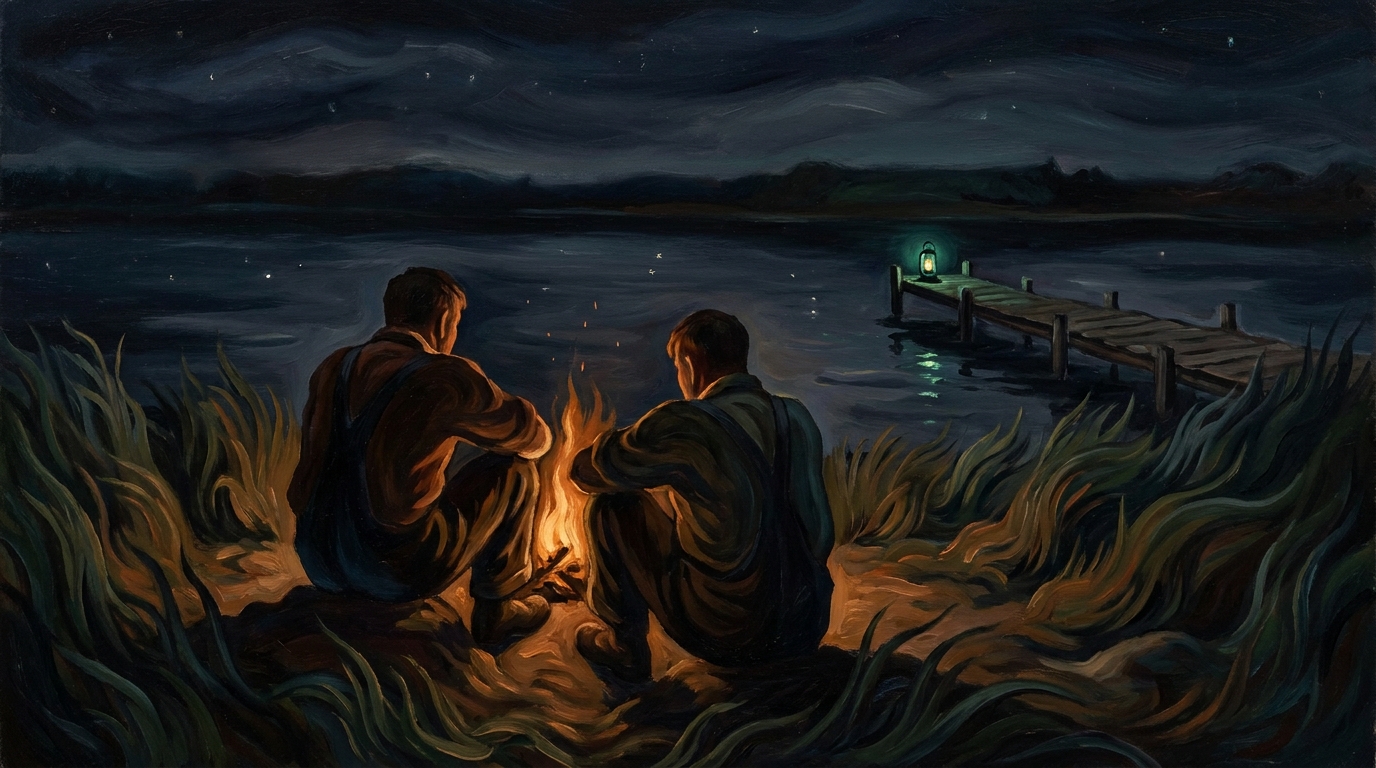
Steinbeck hands the same dream to two ranch hands in Of Mice and Men. George and Lennie recite their few acres like a liturgy, “an’ live off the fatta the lan’,” and the recitation is load-bearing. “Guys like us, that work on ranches, are the loneliest guys in the world” is the verse the dream answers. The belief buys real things: a reason to save the stake money, a story to tell at night, a future with a shape. When Candy offers his savings and the farm becomes suddenly possible, the possibility lasts three days. Then George tells it one last time, in the future tense, so Lennie can die inside it.
Same dream, opposite ledgers. One story spends the belief consuming a man; the other spends it keeping two men alive a little longer. The theme carries weight in both because neither author stops to explain it. The belief does things. It buys, it costs, it keeps people moving, and the story tallies every transaction.
So do this: write your protagonist’s belief in one sentence, what she thinks will finally make her life good. Then read your last three chapters and mark every scene where the belief pays out and every scene where it charges rent. A belief that never pays out is a rumor. A belief that never charges rent is a wish, and it will read like one.