Weather Is Never Neutral
Every weather report in a novel is a stage direction. The reader may not notice the words, but they take the instruction.
Two centuries of fiction trained the audience. Storms mean trouble. Fog means secrets. Heat means somebody is about to lose their temper. When weather drifts into a draft by accident, the reader still assigns it a meaning. Just not one you chose.
Emily Brontë never left weather to chance. In Wuthering Heights, the night Heathcliff disappears, lightning splits a tree in the yard. The storm announces what no one in the house will say: this family is breaking.
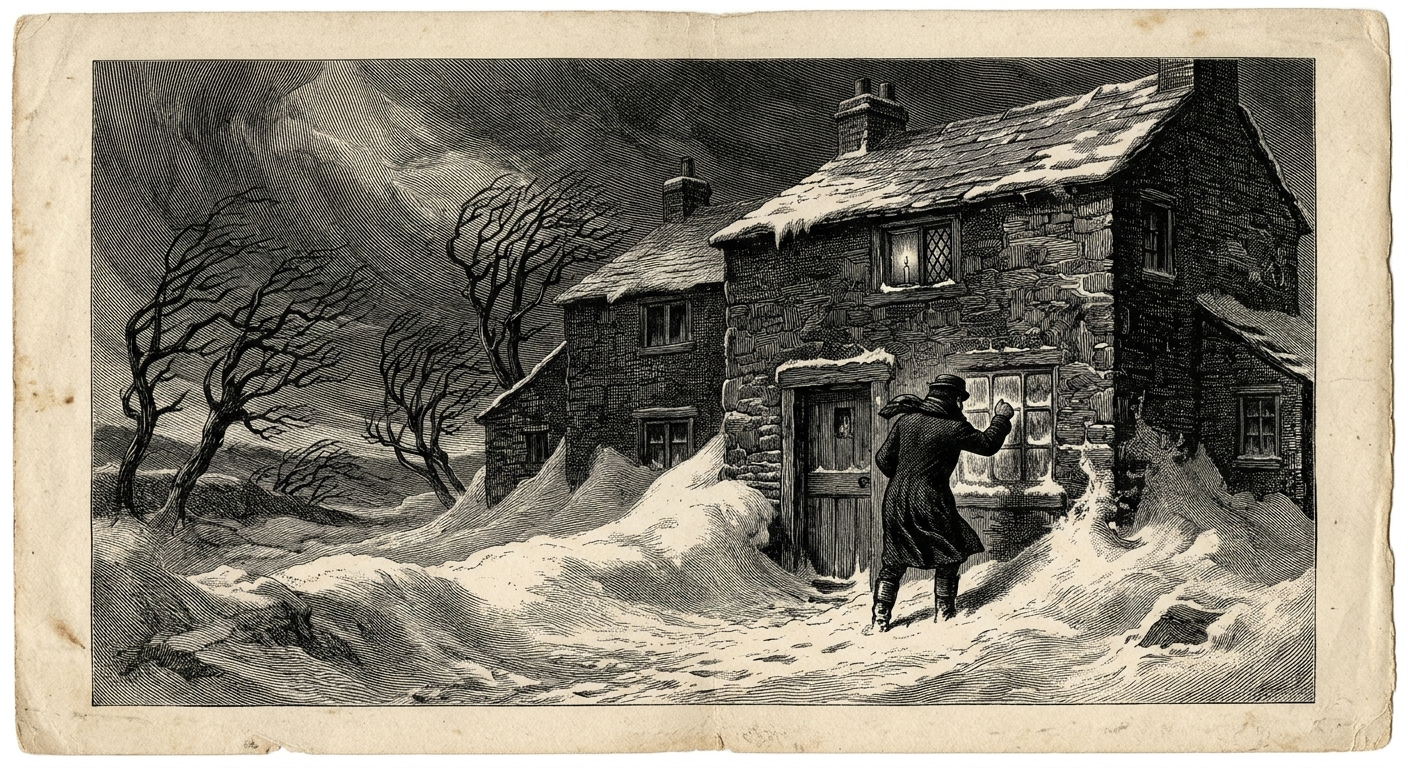
Weather does plot work too. Snow seals the road the night Lockwood stays, stranding him in the house. That stranded night is the only reason the ghost scratches at his window. No snow, no ghost. The weather built the scene.
The danger is weather that does nothing. “It was a beautiful morning” is either dead weight or a promise. Beautiful mornings raise expectations; if nothing comes of them, the reader paid for a delivery that never came.
Circle every mention of weather in the chapter you’re drafting now. For each one, ask what changes if you delete it. If the answer is nothing, cut it, or hand the weather a job to do. If the answer is something, make sure it’s one you intended: an obstacle, a clock, a mood the characters walk through.
#WritingCommunity #AmWriting #WritingTips #FictionWriting #SettingTheScene #CreativeWriting