Nobody Falls in Love in General
Two characters have known each other for three chapters, and the prose keeps insisting on chemistry. The reader feels nothing, because the writer never showed what it is made of.
Attraction on the page is not a mood. It is a list of specifics. Readers believe a romance the way they believe anything: they watched it happen, detail by detail, and testify to each one.
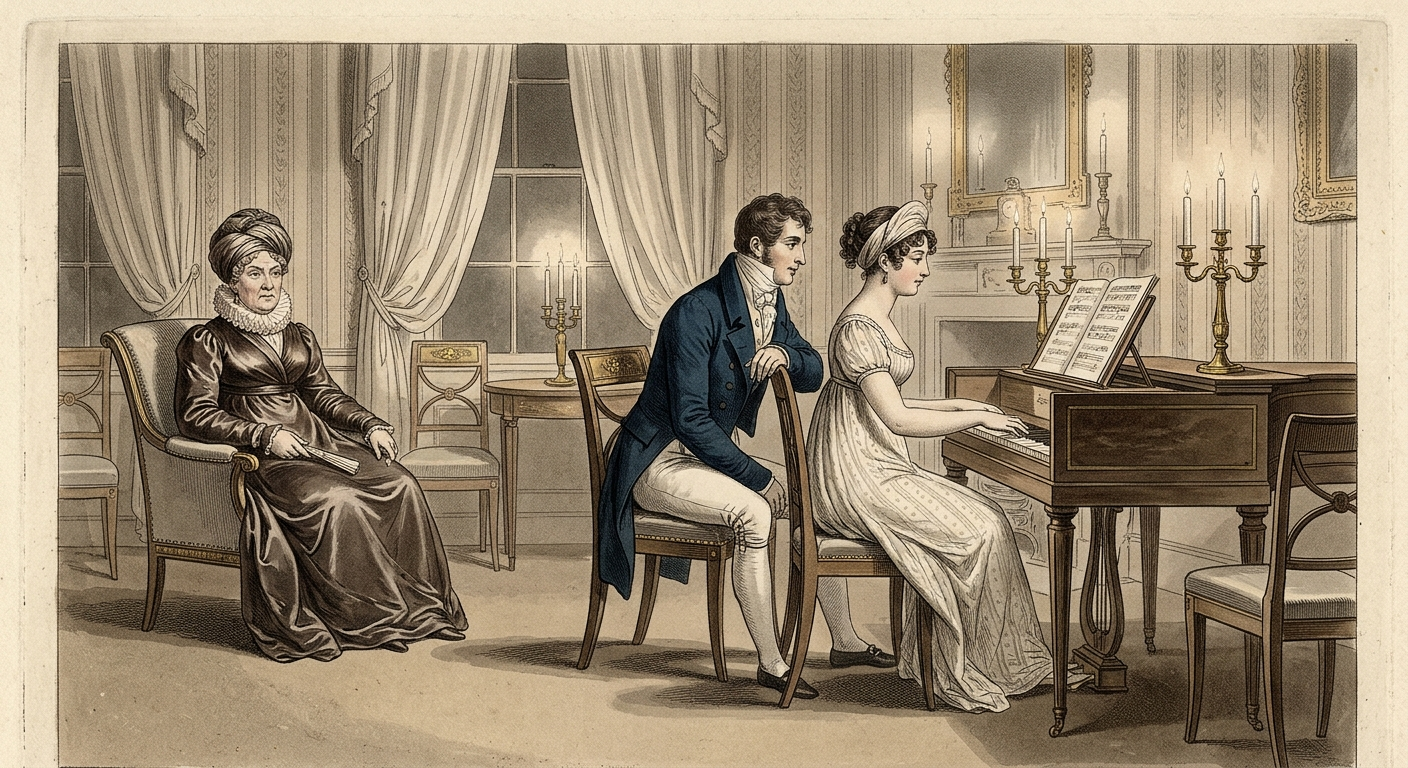
Nobody put it better than Austen. Late in Pride and Prejudice, Darcy tries to name the moment he began to love Elizabeth, and he can’t. “I cannot fix on the hour, or the spot, or the look, or the words, which laid the foundation. It is too long ago. I was in the middle before I knew that I had begun.” There was no moment. There was an assembly where he slighted her, an evening at Rosings when he drew his chair close to hear her play, a changed manner at Pemberley that nobody announced. Small things, each witnessed. The famous feeling is assembled from trivia.
Romance readers arrive holding a contract: two people will fall, and we watch. The trope, enemies to lovers, forced proximity, the fake engagement, is the delivery route, not the product. The product is the fall itself, in visible increments. A trope without specifics is a rumor of a book.
Go to the first scene where your two leads share a room. Cut every sentence that names the feeling (“she was drawn to him”). In each gap, write one thing a camera could record: what he does with his hands, what she almost says, who looks away first. If a stranger reading both scenes couldn’t testify to three concrete details, the chemistry is still a rumor. Give it receipts.
#WritingCommunity #AmWriting #RomanceWriting #WritingTips #WritingCraft #FictionWriting