The Empty Room Test
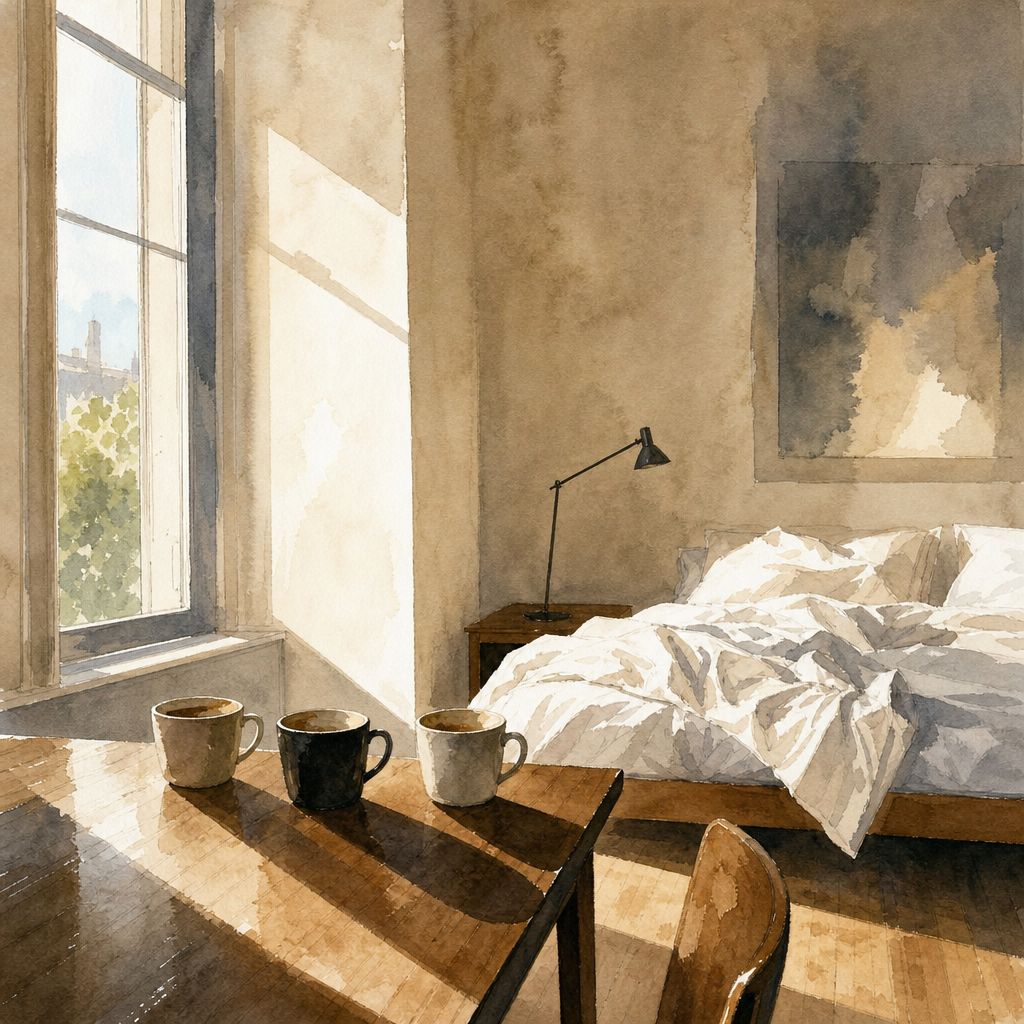
When you want to show a character’s true self, send another character into their bedroom when they aren’t home; let the furniture do the talking. A page of explanation or a list of personality traits is cheap compared to what physical space reveals.
What a person leaves behind when they walk out the door reveals their secrets. A desk is a map of their mind. If your detective walks into a suspect’s den and finds three identical coffee cups, each containing a perfectly dried ring of mold, you already know their mental state. That shows their focus far better than an adjective like “distracted” or “obsessive” ever could.
Every object in a room must perform character work. A bookshelf filled with unopened, leather-bound classics tells a different story than a dog-eared paperback face down on a nightstand. The crumbs of a toasted muffin on a plate fix the time of day; the unmade bed implies a sudden exit.
When we explore a space, we search for what is missing. A missing wedding ring on a bathroom tray; a hook by the door where a key used to hang. These silent negations tell the reader everything; they force the audience to participate in the discovery.
So try this: Choose an important character in your novel and sketch their workspace. Describe five specific objects they keep there, but refuse to name any feelings. Let the dust, the lighting, and the clutter do the emotional heavy lifting.
Continue your writing journey