The Gun on the Wall Doesn’t Have to Be a Gun
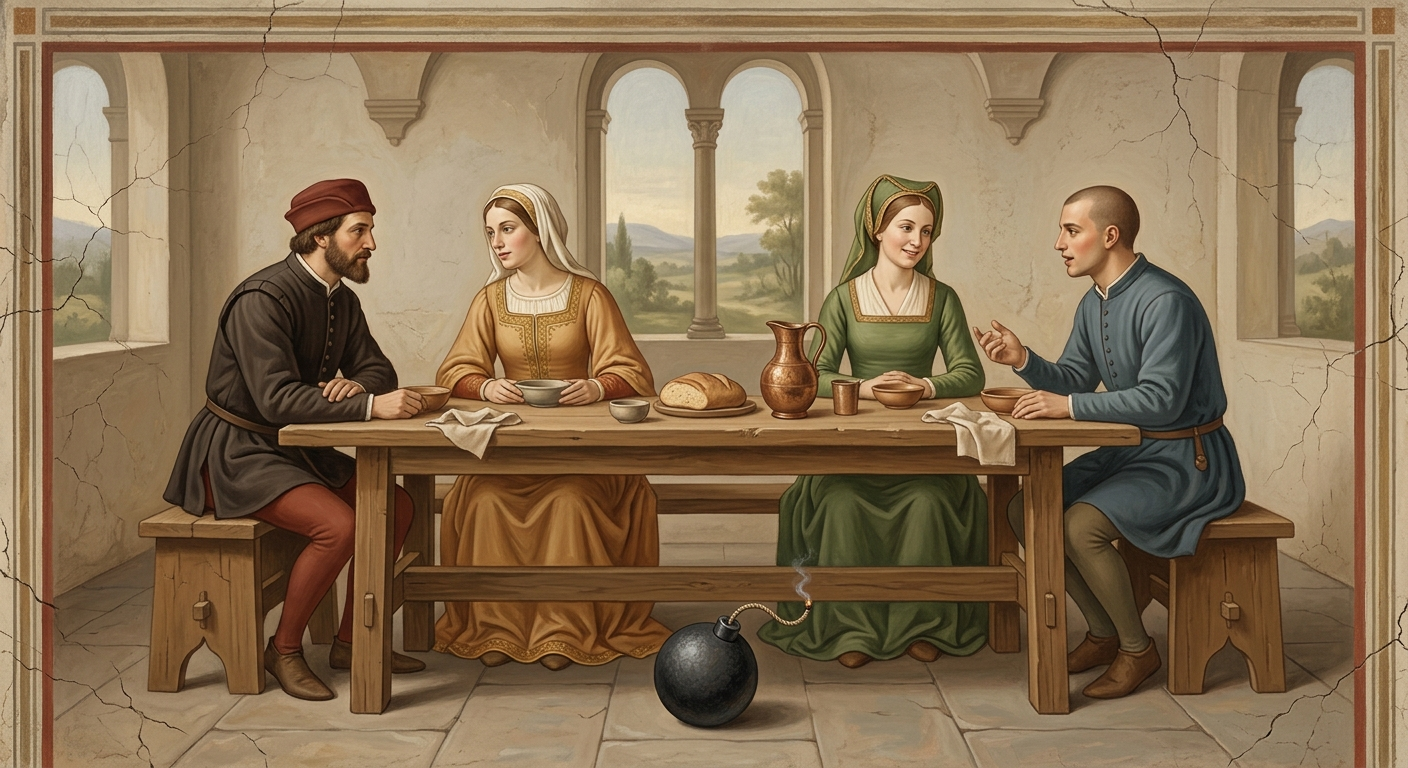
Chekhov said if you hang a gun on the wall in chapter one, it had better fire by chapter three. Fair enough. But most novels don’t run on guns. They run on smaller things: a borrowed sweater, a chipped mug, a voicemail nobody deleted.
The principle still applies. If an object matters in your ending, the reader should have touched it earlier. Not noticed it. Touched it. Handled it in a scene where it meant something ordinary, so when it means something enormous, the meaning has somewhere to live.
Proust built an entire novel on the memory of a bite of cake. You don’t need seven volumes. You need one object, planted early, that returns when it counts.
The trick is planting without pointing. The first appearance should do honest work: the sweater keeps her warm. The mug holds his coffee. The reader files it away as scenery. Later, when she folds that sweater into a box for the last time, it detonates all by itself. You never have to explain a thing.
Flip to the final chapter of your manuscript and list every object that shows up in an emotional moment. Then search your opening chapters for each one. Any object that appears only at the end is a stranger wearing a name tag. Give it one earlier scene where the reader gets to hold it, innocently, first.
Continue your writing journey