Your Scenes Start Thirty Seconds Too Early
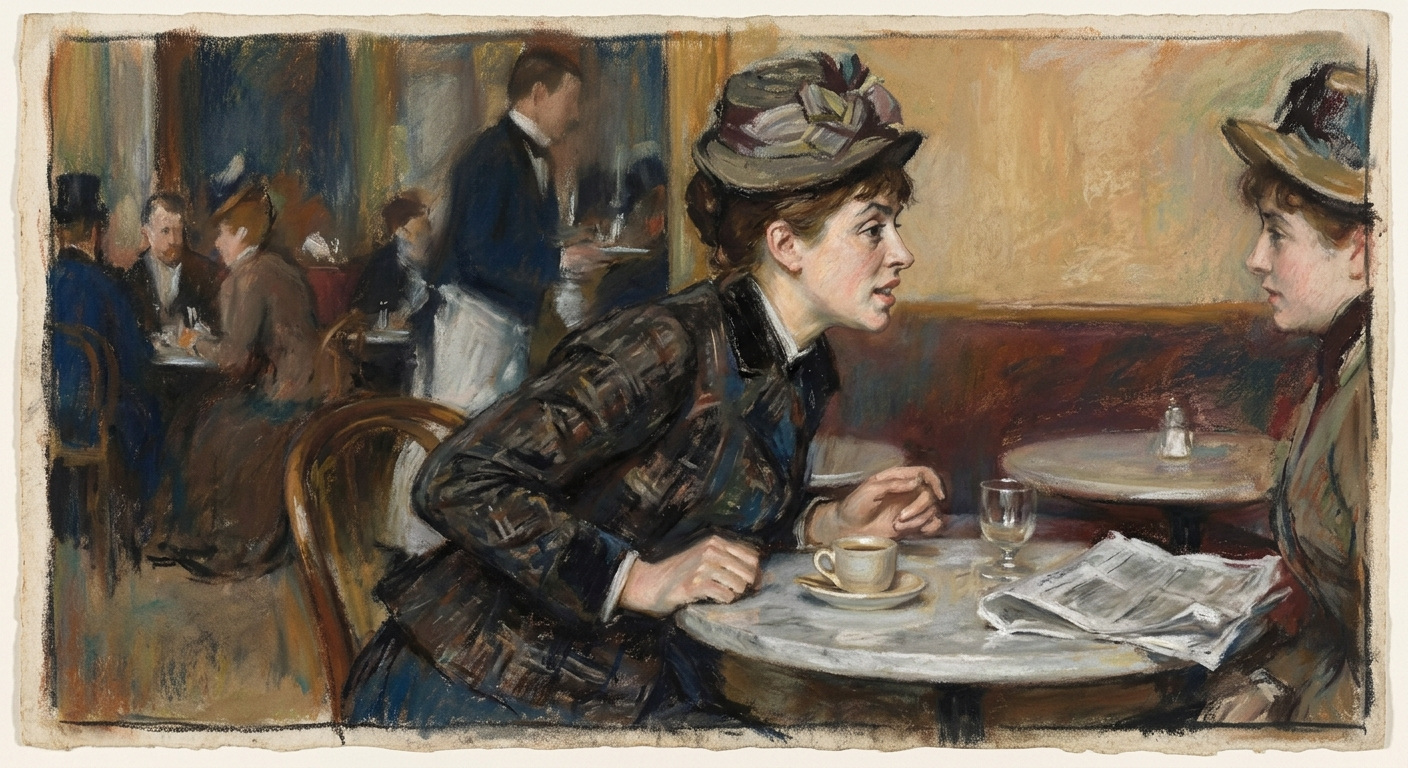
Most scenes start thirty seconds too early.
The phone rings. Your character answers. Hello? Hi, it’s me. How are you? Fine, you? The reader is already skimming.
All of that is staging. Greetings, arrivals, weather, who’s sitting where. It’s you clearing your throat on the page before you say the thing you actually sat down to say.
Enter at the first moment of friction instead: the line where somebody wants something and something pushes back. Watch the Breaking Bad pilot some time. Before the opening credits, an RV crashes through the desert, pants float through the air, and two men in gas masks stand in the road deciding what to do with a body. Nobody introduces anybody. You’re just… in it. That’s what entering late feels like.
The same trick works at kitchen tables. If your scene is a wife telling her husband she lost her job, the scene doesn’t start when he walks in the door. It starts when she opens her mouth to say it.
Take the last scene you wrote and find its first line of real friction: the first moment someone wants something. Draw a line there. Then delete everything above it. If a detail from the throat-clearing matters (who’s in the room, what time it is), fold it into the action after the line. Nine times out of ten, nothing above the line survives. The scene was already running; you just held the curtain too long.
Continue your writing journey