The Two Ways Power Corrupts
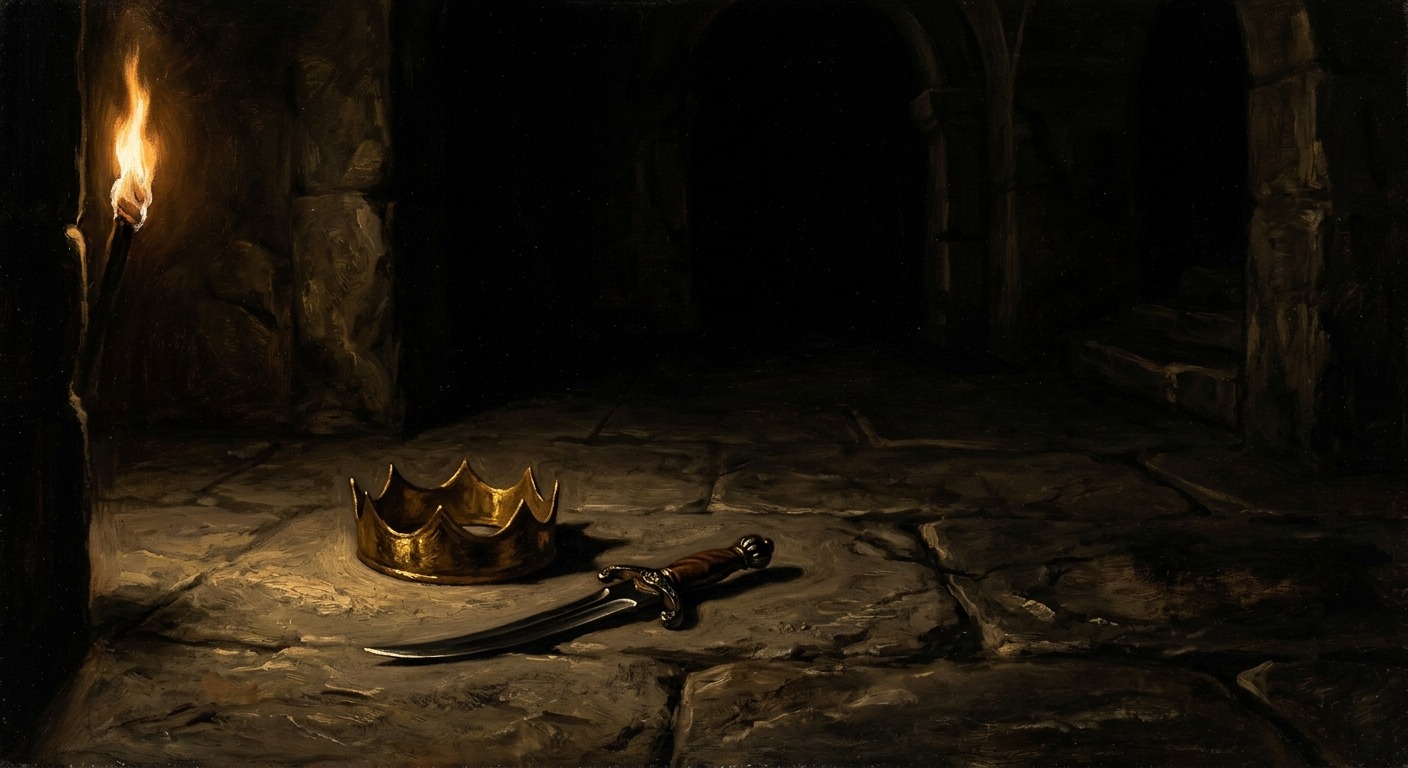
Macbeth murders his way to a throne while we watch, understanding every step. A farm rises in rebellion, proclaims all animals equal, and ends with “All animals are equal, but some animals are more equal than others.” Both are corruption stories. They run on two different machines, and choosing the machine is a structural decision most writers never make on purpose.
Shakespeare runs it by decision. In Macbeth, the hand never moves before the mind conspires. Before the first murder, he names his own engine: “vaulting ambition, which o’erleaps itself / And falls on the other.” Every step after is a scene, a choice, a justification we hear from inside. By the banquet he can say it plainly: “I am in blood / Stepped in so far that, should I wade no more, / Returning were as tedious as go o’er.” We live inside the soul as it rots, and the horror is that each step makes sense to the man taking it.
Orwell runs it by drift. Animal Farm never opens Napoleon’s skull; the pig gets no soliloquy. The revolution rots in its paperwork instead. “No animal shall sleep in a bed” quietly grows “with sheets.” “No animal shall kill any other animal” adds “without cause,” immediately after the purges. Nobody watches the amendments happen. The reader audits what the animals can’t, and the last commandment lands like arithmetic.
Two machines, two story shapes. Decision corruption is a character plot: dramatize the choices, keep the reader inside the justification, let each step be understandable. Drift corruption is a structure plot: hide the rot in language and rules, let small words change in the record, let the reader catch what the characters can’t. Pick by subject. A corruptible soul wants the first. A corruptible system wants the second.
Decide which machine your story runs, then draft the amendment. For a soul: write the three self-justifications that carry your character across each line, in their own voice, one per act. For a system: write the exact words your founding rules gain, note which chapter each change lands in, and mark who notices last. If every change lands in one chapter, you wrote a decision plot and dressed it as drift; spread the amendments out and let the reader do the auditing.