Your Similes Come From Another Book
Most drafts are stocked with comparisons that never met the story. Quiet as a mouse. Fell like a sack of flour. Nerves like a tightrope. Nothing false in any of them, and nothing that belongs to your book.
A simile is manufactured somewhere. The images a character reaches for are made from whatever they’ve spent a life around: the farmer measures rain by what it does to the corn; the nurse reads a body the way a mechanic reads an engine; the gambler prices everything in odds. When the comparison comes out of the character’s world, it does double duty — it describes the thing and tells you who’s doing the describing.
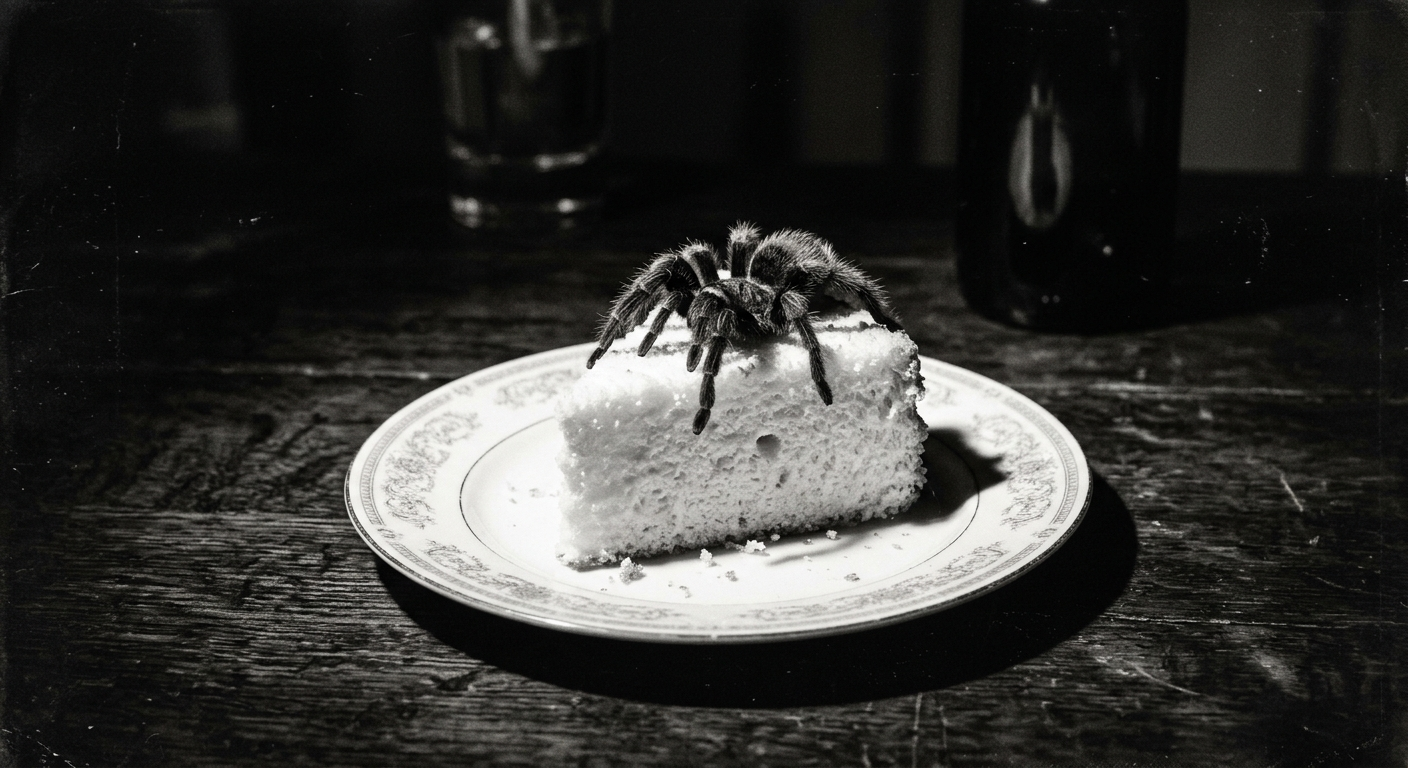
Raymond Chandler built a career on the principle. In Farewell, My Lovely, a huge ex-con walks into a room on Central Avenue, and Marlowe reports that he looked “about as inconspicuous as a tarantula on a slice of angel food.” The line has been quoted for eighty-six years because the eye and the comparison come from the same place. Only Marlowe would reach for it.
A simile imported from some other book (a courtroom image in a fishing-town novel, a stock-ticker metaphor in 1887 Kansas) reads as somebody else’s luggage in your character’s hand. Stack three of them in a chapter and the reader starts to feel the author shopping.
Search your draft for every “like a,” “as if,” and “as…as.” For each comparison, ask where it was manufactured: your world, or somebody else’s? Keep the ones only your narrator could reach. Rewrite the rest from whatever your character knows best. Cut the ones that were only decorating. The sentence usually stands straighter without the crutch.