Skip to content

Writing Academy Blog

  • Home
  • Blog
  • Newsletter
  • Classes
  • Books
  • TopicsExpand
    • Children’s Books
    • History
    • Marketing
    • Mysteries
    • Non-Fiction
    • Romance
    • Screenwriting
    • Self-Publishing
    • Traditional Publishing
    • Young Adult Books
  • Writing TipsExpand
    • Beginnings & Endings
    • Characters
    • Dialogue
    • Scenes
    • Setting
    • Structure
    • Wordcraft
Writing Academy Blog

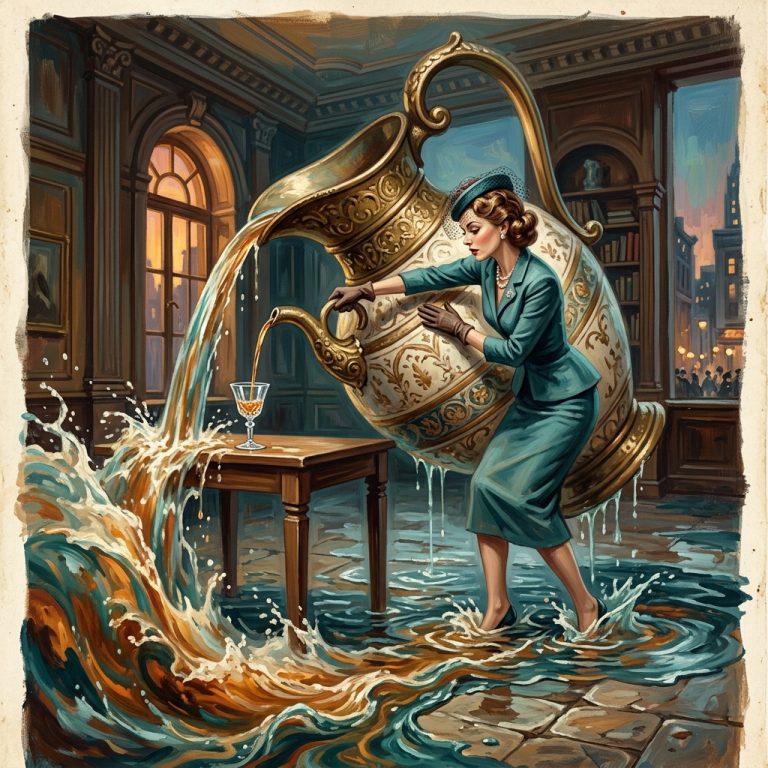
  • Surreal vintage illustration of a woman pouring from an enormous ornate pitcher into a single small glass, water overflowing around her feet
    Structure | Wordcraft | Writing Tips

    The Three Ways to Deliver Backstory—and Why Two of Them Stall Your Story

    Bysteve May 11, 2026June 11, 2026

    “As you know, Bob, our family was killed in the fire 12 years ago” is the most mocked line in fiction writing—because we all know characters don’t talk that way. But I see the same mistake in every form. The info dump paragraph. The flashback that explains everything before the story needs it. The chapter…

    Read More The Three Ways to Deliver Backstory—and Why Two of Them Stall Your StoryContinue

  • The 3-Scene Test That Exposes Passive Protagonists
    Characters | Writing Tips

    The 3-Scene Test That Exposes Passive Protagonists

    Bysteve May 10, 2026June 11, 2026

    Every confrontation in your manuscript was initiated by someone. If that someone is almost never your protagonist, you have a passive protagonist—and passive protagonists bore readers even in high-stakes plots. Take any 3 scenes. Ask: whose idea was this conflict? If the antagonist keeps knocking on doors and the protagonist keeps answering, the reader will…

    Read More The 3-Scene Test That Exposes Passive ProtagonistsContinue

  • Your Book Blurb Needs a Character Question. Here’s How to Find It.
    Structure | Writing Tips

    Your Book Blurb Needs a Character Question. Here’s How to Find It.

    Bysteve May 9, 2026June 11, 2026

    Most book descriptions read like plot summaries. That’s why they don’t sell. A summary tells the reader what happens. A blurb makes them desperate to find out. Those are different jobs, and confusing them is where launches fall apart. The structure that works has three parts. Establish your character and their ordinary world in one…

    Read More Your Book Blurb Needs a Character Question. Here’s How to Find It.Continue

  • Why Your Reader Shrugs at Your Climax: The Emotional Stakes Test
    Characters | Structure | Writing Tips

    Why Your Reader Shrugs at Your Climax: The Emotional Stakes Test

    Bysteve May 8, 2026June 11, 2026

    The protagonist is running for her life. The world is collapsing. The villain has won. And the reader shrugs. Danger and emotional stakes aren’t the same thing. Plot jeopardy comes free with genre—any thriller has danger, obstacles, conflict. What your reader needs before any of that matters is emotional stakes: what is the protagonist’s deepest…

    Read More Why Your Reader Shrugs at Your Climax: The Emotional Stakes TestContinue

  • Why Most Short Stories Are Really Chapter One of a Novel
    Structure | Writing Tips

    Why Most Short Stories Are Really Chapter One of a Novel

    Bysteve May 7, 2026June 11, 2026

    Most writers treat short stories like compressed novels. The form has a single job: show one moment of irreversible change. A novel carries multiple characters, intersecting problems, a web of subplots. A short story can’t. The only territory is one crack in a life, and what fell through. The student stories that don’t work share…

    Read More Why Most Short Stories Are Really Chapter One of a NovelContinue

  • Why Present Tense Is the Most Seductive Mistake in Fiction
    Structure | Wordcraft | Writing Tips

    Why Present Tense Is the Most Seductive Mistake in Fiction

    Bysteve May 6, 2026June 11, 2026

    First-person present tense is the most seductive mistake in contemporary fiction. Writers discover it in published YA or literary novels and try it themselves. The logic seems sound: “I run down the hallway” feels more immediate than “I ran down the hallway.” More urgent. More cinematic. What gets lost is narrative distance. Distance is a…

    Read More Why Present Tense Is the Most Seductive Mistake in FictionContinue

  • Why Action Beats Do More Work Than Dialogue Tags
    Dialogue | Writing Tips

    Why Action Beats Do More Work Than Dialogue Tags

    Bysteve May 5, 2026June 11, 2026

    Every dialogue tag does one job: identify the speaker. An action beat does everything else. “I’m fine,” she said. Reader hears the words.She poured the coffee without looking at him. “I’m fine.” Reader sees the lie. The action creates a second layer on top of the words. What a character does while talking reveals what…

    Read More Why Action Beats Do More Work Than Dialogue TagsContinue

  • What Your Character Notices Tells Everything
    Characters | Setting | Writing Tips

    What Your Character Notices Tells Everything

    Bysteve May 4, 2026June 11, 2026

    Most setting descriptions read like the writer paused the story to file a property report. “The room was large, with high ceilings and antique furniture.” We’ve all written it. It tells the reader nothing about the character experiencing it. The fix: filter every detail through your POV character’s emotional state. Whatever she notices should be…

    Read More What Your Character Notices Tells EverythingContinue

  • Why Your Secondary Characters Are Just Furniture (And How to Fix Them)
    Writing Tips

    Why Your Secondary Characters Are Just Furniture (And How to Fix Them)

    Bysteve May 3, 2026May 29, 2026

    Most writers spend months building their protagonist and fifteen minutes on everyone else. That imbalance shows on the page. The best secondary characters aren’t helpers. They’re mirrors, foils, and pressure points. They embody beliefs your protagonist holds but can’t say out loud—or beliefs your protagonist refuses to acknowledge. Think of Samwise in Lord of the…

    Read More Why Your Secondary Characters Are Just Furniture (And How to Fix Them)Continue

  • The Sense Writers Forget (And Why Readers Never Do)
    Writing Tips

    The Sense Writers Forget (And Why Readers Never Do)

    Bysteve May 2, 2026May 29, 2026

    Most writers describe what a room looks like. Readers remember what it smelled like. Sight is the default because we’re visual creatures. We write the oak desk, the afternoon light, the stack of papers. But smell reaches the emotional brain before the analytical one. Sound works the same way. Taste can detonate an entire era…

    Read More The Sense Writers Forget (And Why Readers Never Do)Continue

  • Why Your Story Feels Episodic — and the Two Words That Fix It
    Writing Tips

    Why Your Story Feels Episodic — and the Two Words That Fix It

    Bysteve May 1, 2026May 29, 2026

    Most writers connect their scenes with “and then.” That’s how you get a plot summary, not a story. Every scene should connect to the next with either “but” or “therefore.” “But” means complication: the character tries something, and it fails, or something unexpected blocks the path. “Therefore” means consequence: because this happened, that follows. When…

    Read More Why Your Story Feels Episodic — and the Two Words That Fix ItContinue

  • A woman at a fork in a misty forest — one path leads to a golden trophy, the other to a warm hidden light
    Writing Tips

    The Real Reason Character Arcs Fall Flat: Want vs. Need

    Bysteve April 30, 2026May 29, 2026

    Most character arcs fail the same way. The character has a goal, they achieve it (or don’t), and nothing feels earned. The problem is confusing want with need. Want is conscious—the thing they’re actively chasing. Get the promotion. Win back the ex. Solve the murder. Need is unconscious—the truth they’re resisting. Learn to trust people….

    Read More The Real Reason Character Arcs Fall Flat: Want vs. NeedContinue

Page navigation

Previous PagePrevious 1 2 3 4 5 6 … 14 Next PageNext

© 2026 Writing Academy Blog

Facebook

📝 Free Manuscript Checklist

Sign up and get the 25-point checklist my students use — plus the writing resources you choose.

  • Home
  • Blog
  • Newsletter
  • Classes
  • Books
  • Topics
    • Children’s Books
    • History
    • Marketing
    • Mysteries
    • Non-Fiction
    • Romance
    • Screenwriting
    • Self-Publishing
    • Traditional Publishing
    • Young Adult Books
  • Writing Tips
    • Beginnings & Endings
    • Characters
    • Dialogue
    • Scenes
    • Setting
    • Structure
    • Wordcraft
Search
We use cookies for analytics to understand how visitors use this site. By continuing to browse, you accept our use of cookies. Privacy Policy.