Your Setting Isn’t Working If the Scene Could Happen Anywhere
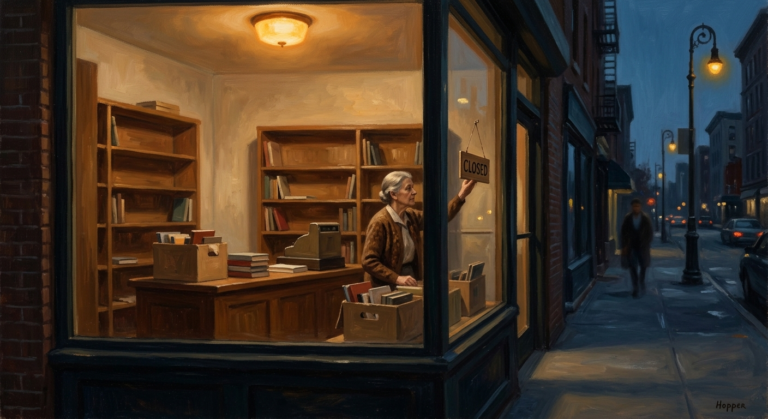
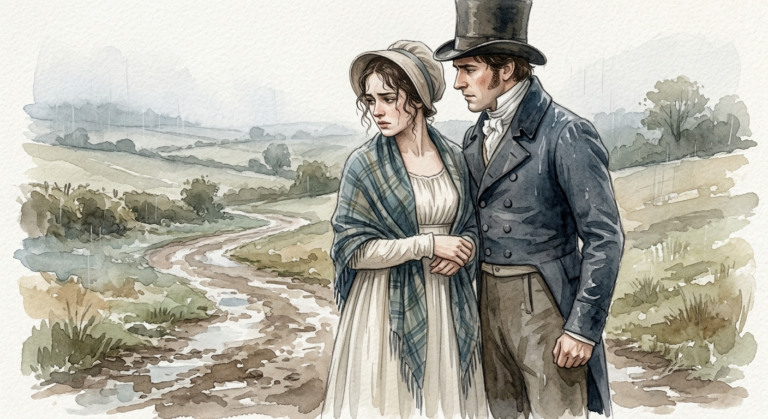
Setting isn’t backdrop—it’s a structural force. The physical space should constrain and enable the action in ways that make this scene inseparable from this place.
A character says “I’m fine” after learning her sister got the promotion she wanted. She’s not fine. Every reader knows it. What earns their attention is whether she’ll keep pretending, and at what cost. That gap between what characters say and what they mean is subtext. Most first drafts collapse it. The writer wants to…
Most prologues are chapter 1 of a different book. The writer can’t bear to start without context. So she writes three pages of backstory—a historical event, a character who won’t appear until page 200, a battle explaining why the kingdom is the way it is. She calls it a prologue. The reader opens the book…
Most novels end on the wrong image. The plot resolves. The protagonist wins or loses or learns something. The last paragraph sums up what it all meant. And the reader puts the book down feeling informed. Not moved. The fix is structural, and older than modern fiction: echo your opening. Your first image and your…
The fastest way to kill a scene is to put a character in a room with no reason to be there. Everybody knows their protagonist wants to solve the murder or win the girl or save the planet. That’s the arc. I’m talking about the reason she walks through that particular door at that particular…
Most novels spanning more than a few days handle time the same way: a chapter ends Tuesday night, the next opens “Three weeks later, Sarah stood at the kitchen window.” The reader’s brain skips like a needle on a record. Stories need gaps. A novel covering six months can’t account for every Wednesday. But “three…
Your protagonist argues with her mother in chapter three. Argues with her boss in chapter seven. Argues with her boyfriend in chapter twelve. Three different people, three different rooms, the same emotional beat every time: she feels misunderstood, pushes back, gets shut down. The settings change. The dialogue changes. But the conflict underneath is identical,…
Cover a character’s name in your manuscript and read the line aloud. If you can’t tell who said it, you have a voice problem. Most characters in most drafts talk the same way. Same vocabulary, same sentence length, same rhythm. Swap the names and nothing changes. The dialogue moves plot information from A to B,…
A coffee mug with three days of dried rings tells the reader more about your character than a whole paragraph describing her apartment. Writers default to the camera pan. The desk, the bookshelves, the window overlooking the parking lot. It reads like a set designer’s notes, and the reader skims right past it. One detail,…
Every scene in your novel starts somewhere emotionally and ends somewhere else. If it starts and ends in the same place, nothing happened. Sounds obvious. It isn’t. I recently reread a draft where the protagonist spent three consecutive chapters winning—she solved the puzzle, charmed the ally, found the clue. Each scene was competent. Each one…
Characters who think too much on the page stop your story cold. A protagonist considers her options, weighs the risks, remembers something from her childhood, and three paragraphs later she still hasn’t opened the door. The reader stopped waiting somewhere around paragraph two. Internal monologue is a trust problem. The writer doesn’t trust the scene…
Foreshadowing fails when the reader sees it coming. A character mentions a gun in chapter two. By chapter eight, someone’s been shot. The reader wrote that ending for you somewhere around chapter four. Real foreshadowing works because the planted detail appears to serve a completely different purpose. In Rebecca, Mrs. Danvers describes how Rebecca arranged…
Sign up and get the 25-point checklist my students use — plus the writing resources you choose.